“Number Please”
Norma Jean, Frank Sinatra, and the Secret Life of Bell Telephone
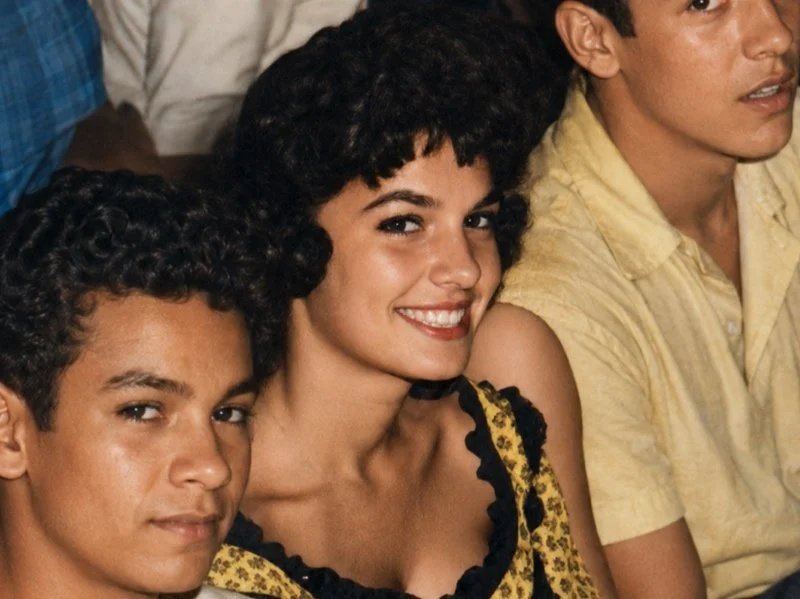
Norma Jean, Los Angeles, circa 1956.
Long before Google knew everybody’s phone number, my mother did.
At seventeen years old, freshly launched into adulthood in late-1950s Los Angeles, Norma Jean took a night job at Bell Telephone in Culver City while studying at college during the day. The plan was practical and wonderfully American: work hard, save money, buy a car, become independent.
Instead, she accidentally wandered into the hidden wiring behind Hollywood.
Norma Jean Schwartz, born Norma Jean Marie Skibel, was named after her father, my grandfather Norman Skibel, and grew up in post-war Los Angeles at exactly the moment America was inventing modern celebrity culture.
Southern California was exploding with optimism, freeways, movie stars, tailfins, swimming pools and ambition. And somehow, through a slightly battered Bell Telephone headset, she found herself connected to all of it.
This was the golden age of the telephone operator. A profession now almost entirely vanished, like soda fountains, railway porters, and the ability to remember anybody’s phone number.
If you wanted to call someone in those days and didn’t know their number, you dialled “Information” and a human being answered.
That human being, very often, was my mother.
“Number please?”
She became, in her own words, “Ms. Google.”
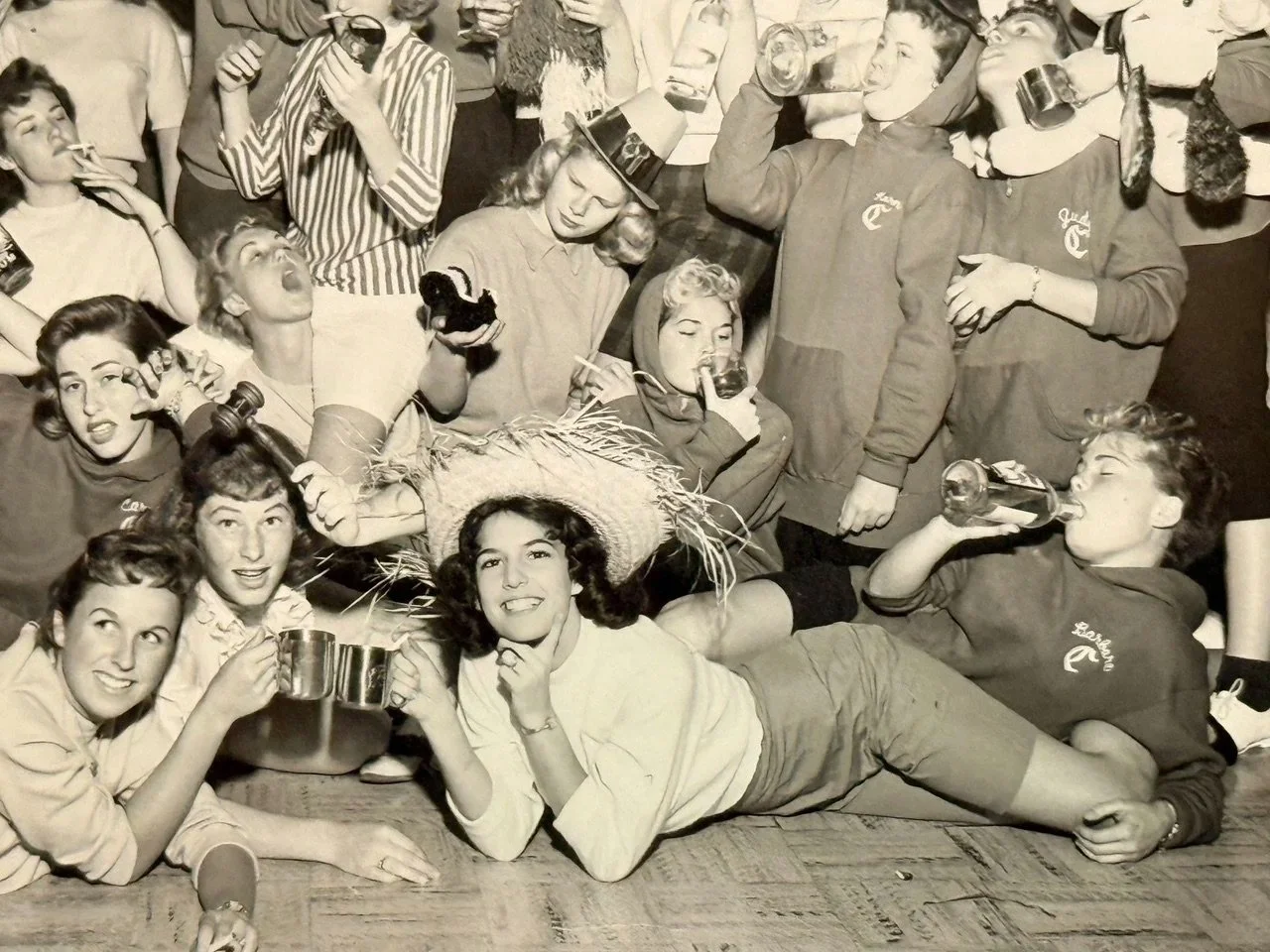
The Bell Telephone information offices operated around the clock in 1950s Los Angeles.
The Bell Telephone information office in Culver City was enormous. Around fifty women worked there at once, seated in long rows beneath fluorescent lights, connected to the entire city through headsets and switchboards.
It never slept.
Los Angeles, even then, was a city fuelled by motion, gossip, ambition and late-night phone calls.
And somewhere among it all sat Norma Jean, quietly handing out telephone numbers to Southern California.
For nearly seven years she worked on and off for Bell Telephone, eventually transferring to Beverly Hills, where things became considerably more interesting.
There, she was placed in charge of ex-directory numbers. What Americans called “unlisted numbers.”
These were the secret numbers. The private lines. The people who absolutely did not want the public calling them at home.
Movie stars. Musicians. Wealthy businessmen. Actors hiding from fans, reporters, ex-spouses, and occasionally each other.
Why was a young woman in her early twenties trusted with some of the most confidential phone numbers in America?
Family connections helped.
Her Uncle Bob Skibel happened to be head of security at Bell Telephone.
In retrospect, this may have been a catastrophic administrative decision.
Because although Norma Jean was responsible and trustworthy in the broadest sense, she also possessed a wonderfully dangerous streak of moral spontaneity.
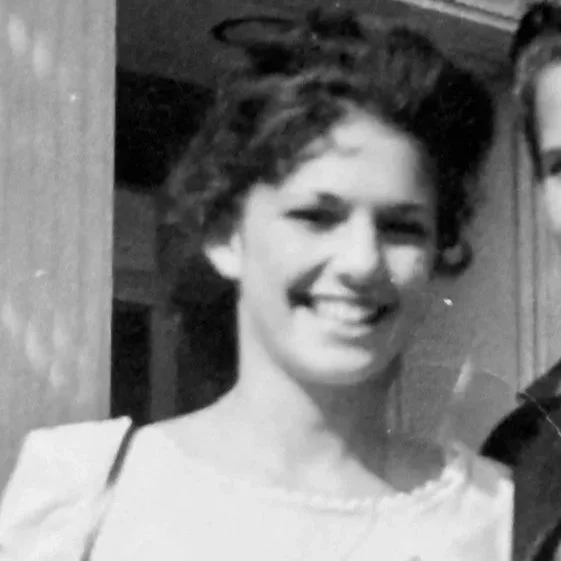
Norma Jean during her Bell Telephone years in Los Angeles.
Take Frank Sinatra.
At some point in the 1950s, Norma Jean had read in the gossip columns that Sinatra had left his wife and three children. Like much of America, she was appalled.
Unlike most of America, however, she had his private telephone number sitting in front of her.
So she took it home.
That evening, she called Frank Sinatra personally to inform him what a terrible human being he was.
“I told him what a horrible man he was,” she said casually over dinner last night, as though this were the sort of thing people did every day.
Then came the pause.
“I never told Uncle Bob.”
One suspects Bell Telephone’s employee guidelines may technically have discouraged this sort of thing.
The truly marvellous part is that she recalls the event with absolutely no sense that it was remotely extraordinary. To her, it was simply civic duty.
Sinatra, somewhere in Beverly Hills, had probably expected congratulations, adoration, perhaps screaming fans.
Instead, he received an unsolicited ethical review from a teenage telephone operator in Culver City.
Hollywood in the 1950s was evidently a far less managed world than today.
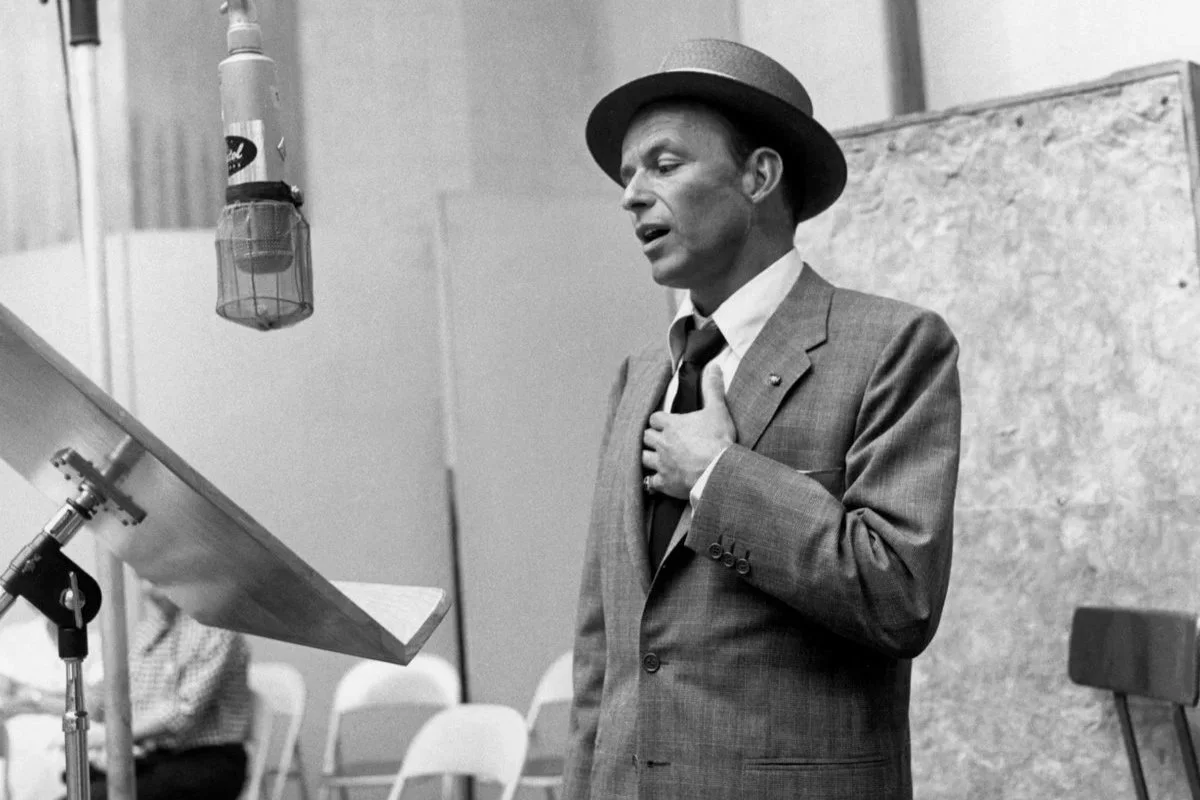
Frank Sinatra in the studio during the valve-microphone era that still inspires recording today
Not all the celebrities were intimidating.
One of Norma Jean’s favourite memories was of Joanne Woodward, the actress and wife of Paul Newman.
My mother had phoned to welcome her to the ex-directory service and explain how it worked alongside the Yellow Pages.
Woodward politely asked if she could call back in twenty minutes because her two young daughters were sitting on the Yellow Pages in order to reach the breakfast table.
It was such a gloriously ordinary image that Norma Jean never forgot it.
“She was sweet,” she said. “Really humble and nice.”
And that may be the strange genius of old Hollywood. Behind all the glamour were still children climbing onto phone books so they could reach their cereal bowls.
And then there was Alan Shepard.
This was not, strictly speaking, Hollywood. It was something larger and, in its own way, even more American.
Bell Telephone was appearing at a communications conference in Los Angeles, and Norma Jean was there on the stand with a co-worker. One imagines a room full of men in dark suits explaining the future beside large pieces of equipment that hummed with authority.
Then Alan Shepard walked in.
Not long before, he had become the first American in space. For a brief, dazzling moment, he was not simply famous. He was the face of the space age. America had fired a man beyond the atmosphere, brought him safely home, and now here he was, next to the Bell Telephone stand.
So Norma Jean and her friend did the obvious thing.
They went over and asked if they could have a photograph with him.
Nobody called it a selfie, of course. The word did not exist, and the telephone, being at that point a large and serious object attached to a wall, was not yet in the business of taking pictures. But the instinct was exactly the same. History had walked into the room, and two young women from Bell Telephone wanted proof that they had been standing next to it.
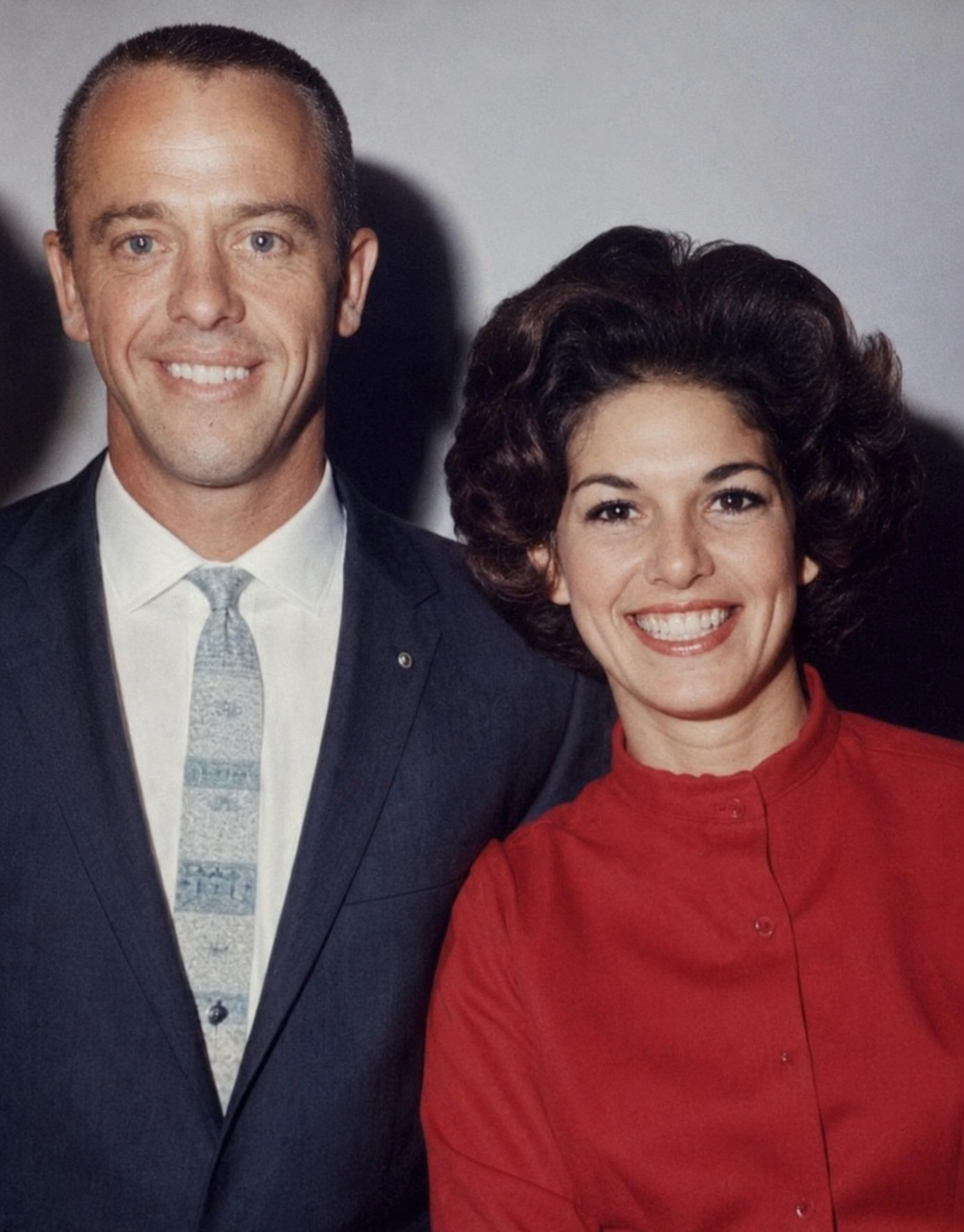
Norma Jean with astronaut Alan Shepard at a Los Angeles communications conference, shortly after he became the first American in space.
Bell Telephone occasionally assigned operators to monitor important business lines for audio quality. One evening, Norma Jean found herself listening to investment brokers in Beverly Hills discussing a company called Mattel.
The recommendation sounded strong.
Very strong.
Mattel, at the time, was busy introducing something called Barbie.
“I could be a billionaire now,” my mother reflected mournfully sixty-plus years later.
History, unfortunately, is littered with people who almost bought shares in the right company.
Over dinner last night, the memories kept returning in fragments. More stars. More private numbers. More stories she says she can’t quite remember unless she “thinks deeply.”
Which probably means there are still half a dozen extraordinary tales somewhere inside her memory waiting patiently to reappear.
What strikes me most is how physical and human the entire world was back then.
Today, celebrity exists behind passwords and encrypted apps and layers of security. But in 1959, somewhere in Los Angeles, a young woman working nights at Bell Telephone might quietly hold the private home numbers of half of Hollywood inside a drawer.
And occasionally, if sufficiently annoyed by the gossip columns, ring one of them up to express disappointment.
There is something wonderfully comforting about that.
And perhaps it also explains something I have noticed all my life.
Norma Jean has always had a kind of star attraction. Somehow, wherever she is, interesting people seem to gather around her.
So it felt rather perfect that, all these years later, after we had finished recording Cutting Crew’s new album here at the studio, there she was again, right in the middle of the story, standing with Nick Van Eede.
Different decade. Different country. Different telephone.
This time, the telephone took the picture.
But still Norma Jean.
Still connected.
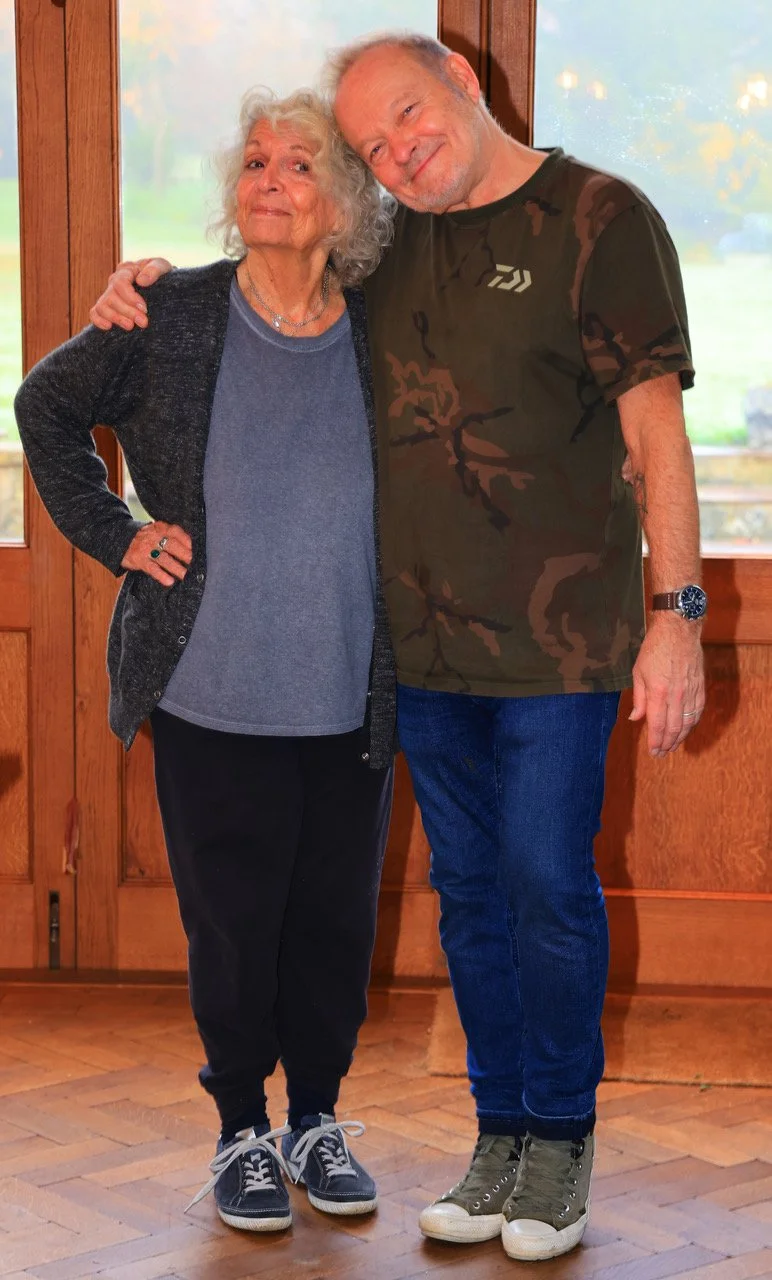
Norma Jean with Nick Van Eede of Cutting Crew at Curtis Schwartz Studio, Sussex, 2026
— Curtis Schwartz, Sussex, 2026
More from the studio journal
If you enjoyed this story, you might also like these:
Uncle Sid, John Wayne and Old Hollywood
Another family story from the archive, with a remarkable link to early Hollywood.
Read the story
When Roger Dean brought Aurora to the studio
A lovely behind-the-scenes moment with Roger Dean, Steve Howe, the Aurora artwork, and the studio where the album was made.
Read the Aurora story
Explore Curtis Schwartz Studio
See the rooms, instruments and residential setting where the music is made.
Visit the studio
