A Long, Long Time Ago…
Zermatt, 1972
This afternoon, while sitting in an English country pub with my laptop, waiting to collect my daughter from her ballet class, I suddenly found myself back in Switzerland in 1972.
The pub was warm, slightly noisy, faintly sticky in the traditional British pub manner, and I was working on my laptop, answering emails on my iPhone and doing the ordinary little admin of the day.
Then the radio started playing Don McLean’s American Pie.
Not as background music, either. It arrived exactly as it always has: big-hearted, impossible to ignore, and somehow still sounding like it had only just been written.
And instantly I was eight years old again.
My father’s name was Frederick John Schwartz, though to me he was simply Fred.
He was not especially fond of “Fred”.
In Britain, the name had become tangled up with Right Said Fred, a daft little song about men stopping for another cup of tea while failing to move a piano upstairs. The piano, at least, would turn out to be prophetic.
By then my father had adopted the nickname Zampanò, after the travelling strongman in Fellini’s La Strada, which tells you quite a lot about the scale on which he preferred to imagine himself.
But to me, and more or less only to me, he remained Fred.
My parents had separated the year before, so time alone with my father was rare and precious. Before I was ten, we somehow managed three memorable father-and-son expeditions together, each with its own soundtrack and mythology.
There was the drive across France, soundtracked by Richard Burton’s rich Welsh voice reading Dylan Thomas’s Under Milk Wood, almost singing it.
For years afterwards, if anyone mentioned Dylan, my mind went first not to Bob, but to Thomas, which may be the only thing Bob Dylan and I ever had in common.
On that summer drive down to the South of France, we explored salt mines, because my father had a magnificent talent for finding tourist attractions no child had ever voluntarily requested.
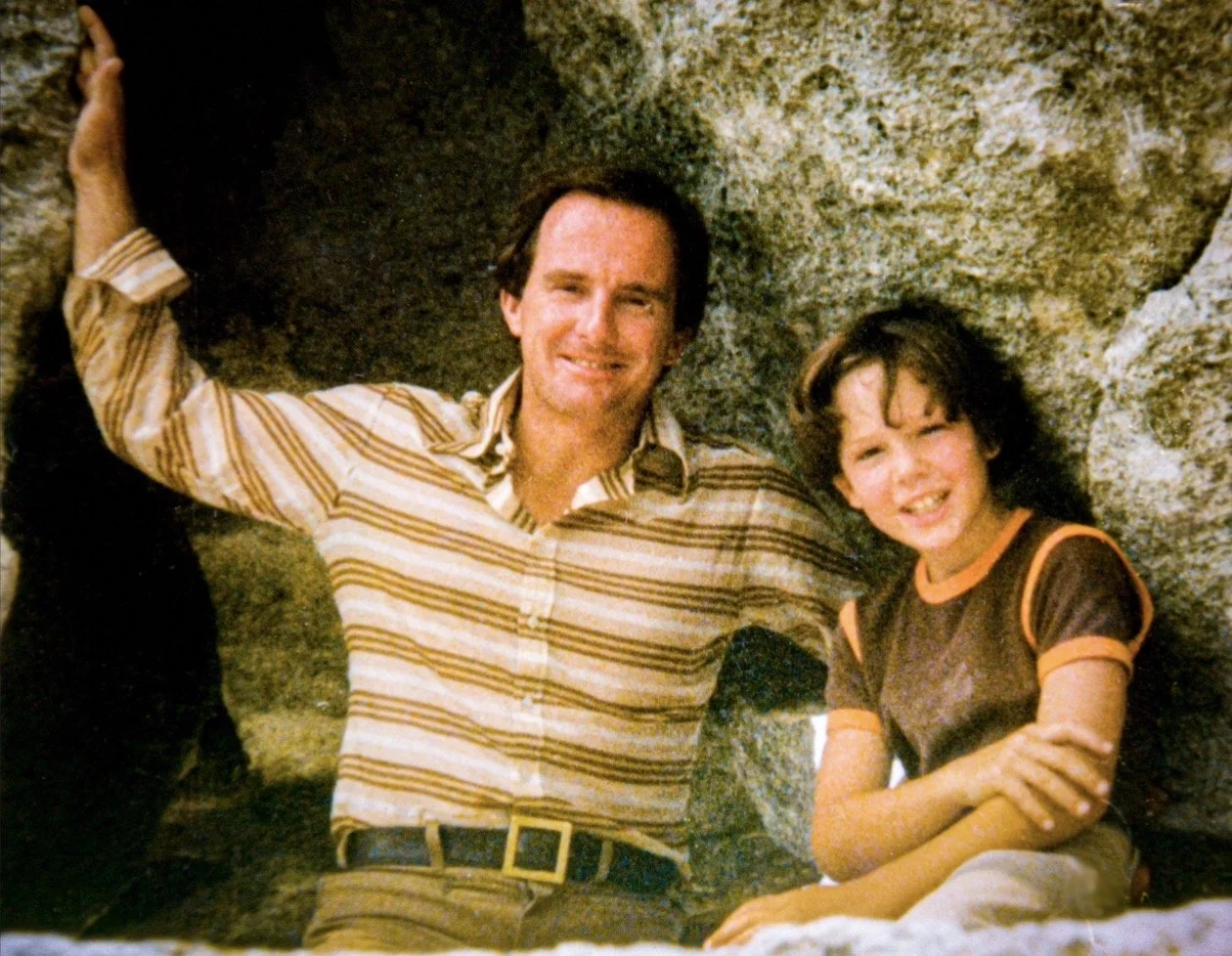
Fred and me in the salt mines, France, early 1970s.
There was also the epic drive from Los Angeles to Mammoth for skiing, soundtracked by an eight-track cartridge of The Ink Spots. To this day, whenever I hear Java Jive, with its cheerful devotion to coffee and tea, I can practically smell the cold vinyl seats and ski gloves drying on the dashboard.
But Zermatt was the special trip.
Every evening after skiing, my father and I would descend into the hotel’s après-ski bar. I would order hot chocolate. He would somehow acquire Swiss francs from impossible pockets hidden inside ski jackets.
There was a jukebox in the corner, and on that jukebox was a brand-new song called American Pie by Don McLean.
I played it obsessively, and my father indulged me every single time.
Three times a night at least. Sometimes more. For an entire week.
It was, famously, not a short song. The jukebox version was split into Side One and Side Two, which somehow made the whole thing feel even more theatrical: Side One, pause, machinery, Side Two.
And still my father never once said, “Perhaps that’s enough American Pie for one evening.”
He just smiled, found another coin, and let the song begin again.
And I would put another Swiss franc into the jukebox and watch the little theatre start up once more: the mechanism stirring, the record turning, the arm swinging across, the needle dropping with that comforting little plonk as it found the groove.
Then Don McLean’s voice would begin again, warm and intimate:
A long, long time ago…
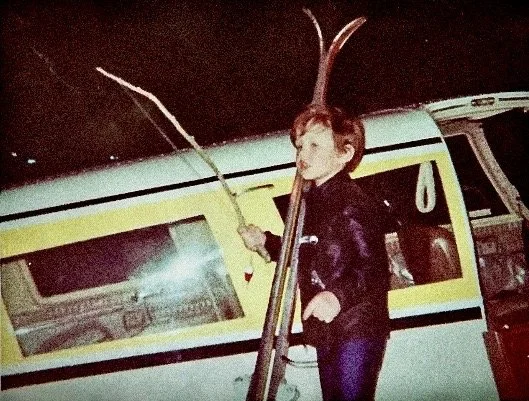
Zermatt, 1972
I suspect the other hotel guests were quietly hoping for an avalanche.
But I could not get enough of it.
The song seemed enormous somehow. Puzzling lyrics. Funny. Sad. Joyful. Full of grown-up references I didn’t yet understand, but wrapped in melodies that felt instantly important.
Even as a child, I sensed it was about something much bigger than music charts and pop radio.
Of course, now I understand that grief was part of it.
Don McLean was writing about Buddy Holly and the death of innocence, and the strange moment when music stops simply being entertainment and starts becoming memory itself.
At eight years old, I understood none of this.
I was mostly interested in skiing, hot chocolate, Swiss coins and hearing American Pie over and over again.
But memory is a cunning thing. It stores not just events, but atmosphere. A song can preserve entire worlds in suspended animation.
And my father loved worlds hidden inside words.
He always carried a small book of poetry in his ski jacket.
A man on a snowy chairlift in the Alps, skis dangling high above the trees, halfway between earth and sky, reading poetry aloud to his son.
That was my father.
It was there, on those chairlifts above Zermatt, that I first heard Robert Frost:
Two roads diverged in a wood, and I
I took the one less traveled by…
As a kid, I mainly thought it sounded pleasantly mysterious and hoped the less-travelled road had better skiing.
Only later did I understand how profoundly those words shape a life.
Music works similarly.
We think we are merely listening to songs, but quietly they are becoming landmarks in the geography of our lives.
A few opening notes and suddenly decades collapse like concertina doors.
One moment you are a record producer in Sussex, working on your laptop, answering emails on your iPhone and drinking tea in a pub.
The next moment, you are back in a ski bar in Zermatt in 1972, your wet ski gloves drying on the radiator, your father smiling and retrieving another coin from his pocket because apparently hearing American Pie only twice in an evening would be absurdly insufficient.
And today, perhaps most movingly of all, I realised that while waiting to collect my daughter from ballet, I had quietly become the father in the story.
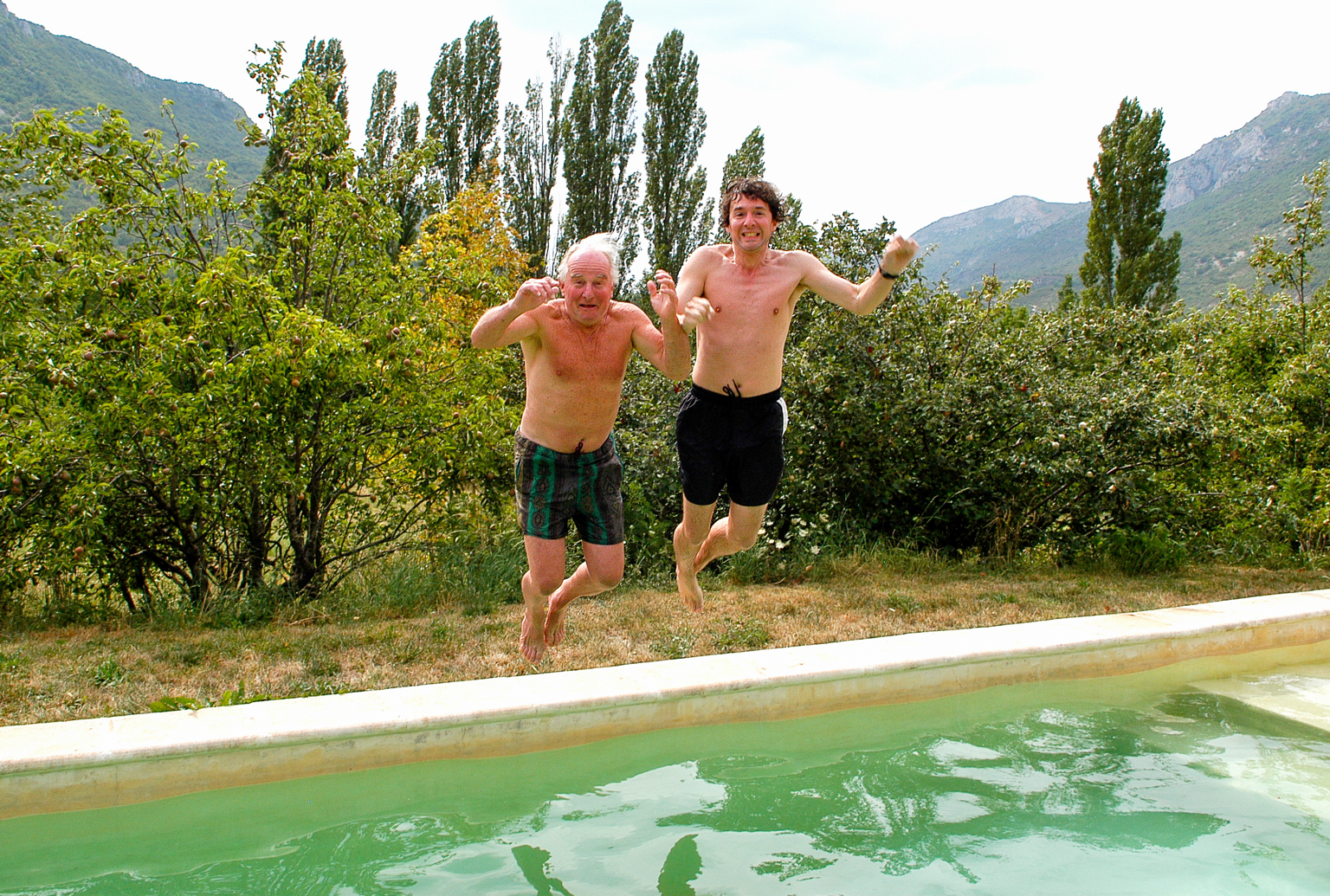
Fred and me in the south of France, July 2004
My father died in July 2006.
Twenty years ago this month.
That sentence still surprises me because grief does not move through time in a straight line.
Some losses become oddly heavier as life goes on, not lighter.
You accumulate more questions you wish you’d asked. More stories you wish you’d heard one final time. More understanding of who your parents really were beneath the practical camouflage of adulthood.
And yet today, listening to American Pie in a countryside pub, what I felt most strongly was not sadness.
It was gratitude.
Gratitude for those trips.
For the music hidden inside Dylan Thomas’s words.
For poetry on chairlifts.
For hot chocolate after skiing.
For impossible quantities of jukebox plays.
For The Ink Spots on an eight-track cartridge crossing California.
For a father who understood that music and poetry are not luxuries, but companions for the journey.
And then it was time to pick my daughter up from ballet.

July 2026. Still sitting in pubs, listening to music and drinking tea.
As I stood up to leave the pub, fate delivered one final moment of perfection.
Through the pub’s sound system came Elton John’s Tiny Dancer.
And there I was, smiling to myself as I headed off to collect my own tiny dancer.
Music does that. It follows us through life like a thread stitched quietly through time. Or perhaps it leads us.
One song reminds us of who we were.
Another song seems to have been waiting years, for just the right moment, to show us who we have become.
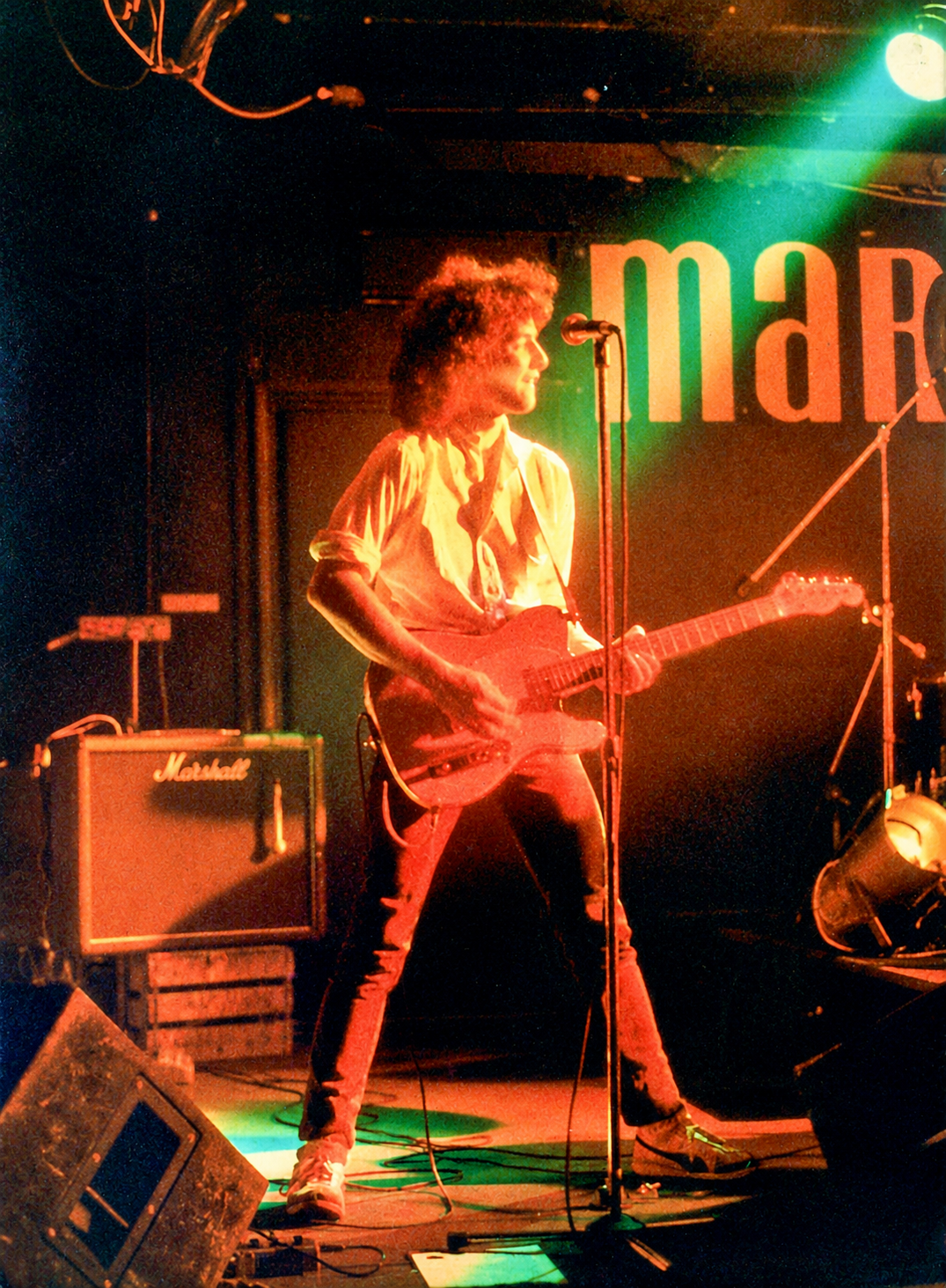
Somewhere along the way, the little boy in the après-ski bar found his way into music.
Elton, as it happens, had wandered through my story too. But that belongs to another song, and another day.
