Growing Up with Old Hollywood
Desert hikes, John Wayne, and the stories my great-uncle Sid carried out of Hollywood’s golden age.
At the turn of the millennium, my great-uncle Sid and I would leave his home in the hills above Bel Air at 5am and drive out into the California desert.
We would listen to classical music as Los Angeles slipped away behind us. Prokofiev. Mozart. Beethoven’s Pastoral Symphony. Desert music, somehow.
By 8am we would reach our favourite roadside café for breakfast. Then we would continue towards Saddleback Butte, climbing early enough to reach the summit before lunch and still make it back into LA before the evening traffic.
Sid loved the California mountains and was quite a mountaineer. There is even a plaque commemorating him at the summit of Mount San Jacinto outside Palm Springs. He climbed that mountain 365 times.
It was on those road trips and hikes that Sid would share with me his Hollywood stories.
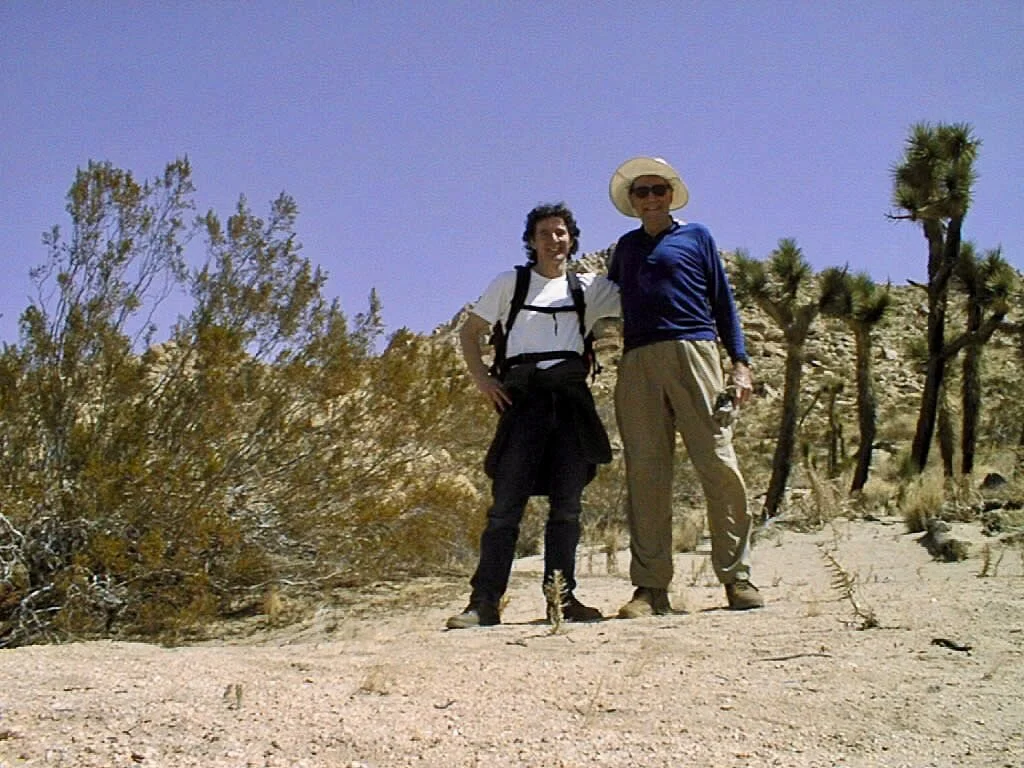
Sid and me on Saddleback Butte around 1999. We used to leave LA before dawn, drive into the California desert, and hike while he told me stories from old Hollywood.
And Sid had seen Hollywood from unusually close range.
Buster Keaton films, King Kong, a speaking part in Charlie Chaplin’s The Great Dictator. And in the famous opening shot of Citizen Kane, it was Sid’s hand holding the snow globe when Orson Welles as Kane whispers “Rosebud”.
But Sid was never really one of the stars.
He was one of the people standing just beside them.
Therefore, all the major actors in Hollywood knew him.
Especially John Wayne.
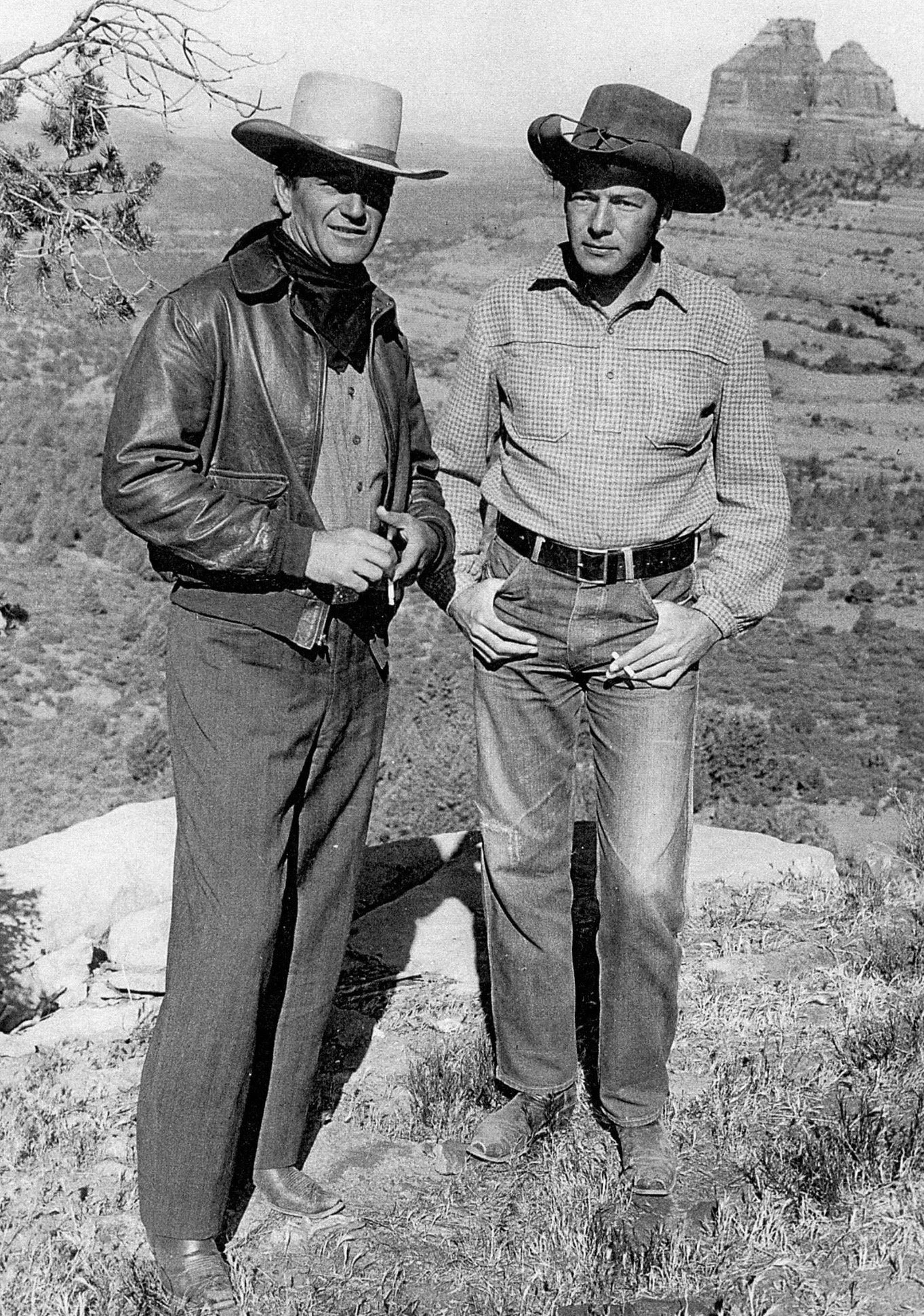
My uncle Sid with John Wayne on location in Arizona during the 1950s. Sid worked for many years as Wayne’s stand-in, stunt double and close friend.
Sid was close enough in height and build to Wayne to become his regular stand-in and occasional stunt double. In Red River, when the figure dives into the river, that was my uncle Sid, not Wayne. And when a rider would leap from horseback onto an attacking Native American warrior during a fight scene, that was Sid too, not John Wayne.
Because Sid became Wayne’s regular stand-in, the two men spent years together on film sets.
Therefore, over time, they became close friends.
Film production in those days involved endless waiting around while lights were adjusted and cameras repositioned. Sid and Wayne would pass the time playing chess between takes.
And according to Sid, Wayne took those games very seriously.
Sometimes the assistant director would call Sid away so the crew could test the lighting for Wayne’s next scene.
But if it happened to be Sid’s move on the chessboard, Wayne would wave the crew away and say:
“That’s alright. You make your move, Sid. I’ll stand in for myself.”
So the biggest movie star in the world would patiently walk over and stand beneath the hot studio lights while my uncle Sid finished considering his next chess move.
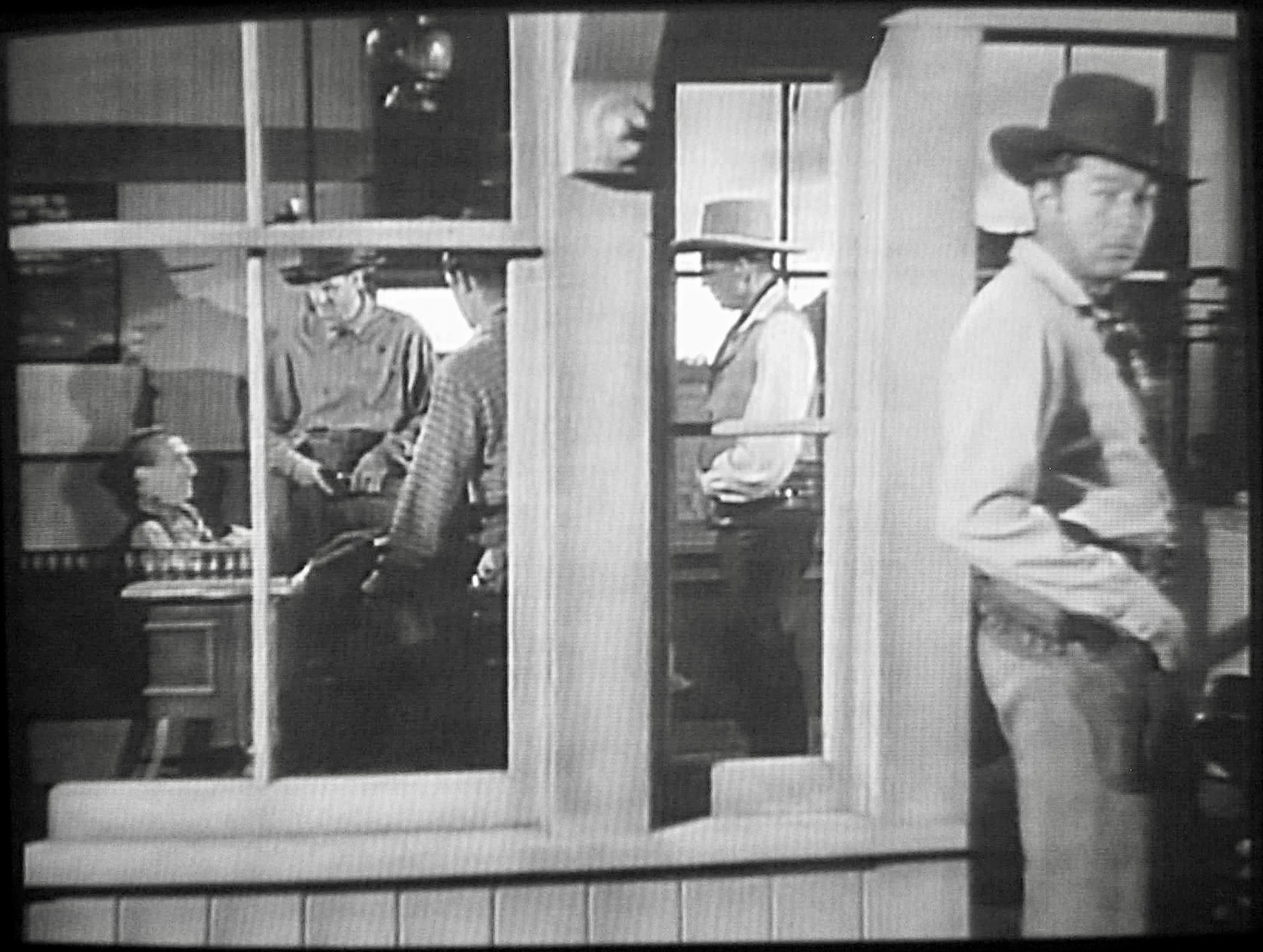
Sid appearing in Angel and the Badman (1947), starring John Wayne and Gail Russell. The film was Wayne’s first production as a producer and became one of the defining westerns of the postwar era.
Then Sid had an idea.
He wanted to make short educational films for children. Films warning about real-world dangers: crossing roads, talking to strangers, playing near railways.
Wayne believed in the idea enough to give Sid $40,000 to launch the project and start his own film company.
Therefore, Sid began travelling to make these films.
And that decision may have saved his life.
In 1954, while my uncle Sid was away in South America filming one of his educational projects, John Wayne travelled to Utah to make The Conqueror.
The production was directed by Dick Powell and filmed in Snow Canyon near St. George, Utah, downwind from the Nevada nuclear test sites.
Only a short time earlier, the United States government had detonated atomic bombs in the desert nearby.
The mushroom clouds had disappeared. The desert looked peaceful again.
Therefore, Hollywood arrived with cameras, horses, actors and film crews.
But years later, something eerie began to emerge.
An alarming number of people connected with The Conqueror developed cancer.
John Wayne died of stomach cancer.
Susan Hayward died of brain cancer.
Agnes Moorehead died of cancer.
Pedro Armendáriz developed cancer and later took his own life.
Director Dick Powell also died of cancer.
The production eventually became infamous in Hollywood history as “the radioactive movie”.
And that was the chilling part of Sid’s story.
For once, my uncle Sid was not standing in for John Wayne.
He was somewhere else, making children’s safety films.
And that may be why he survived to tell the story.
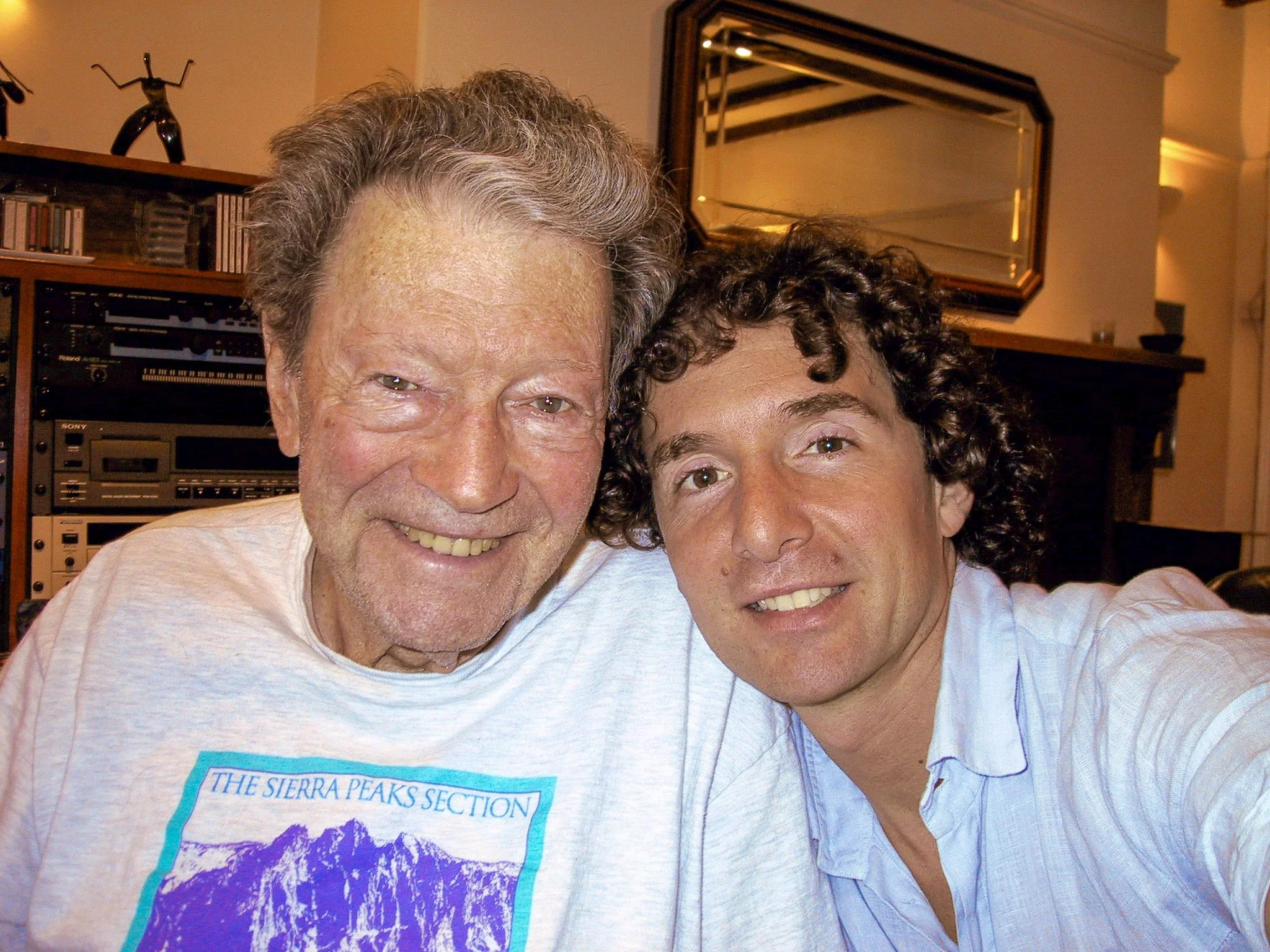
Sid and me in 2001, not long before I took him to see Stones in His Pockets in London’s West End. Even in his later years, he was still hiking, travelling, and telling stories from old Hollywood.
Afterword: Sid in the Audience
Coincidentally, in August 2001, I took my uncle Sid to see Stones in His Pockets in London’s West End.
The play revolves around a quiet Irish village being turned upside down when a Hollywood film crew arrives to make a movie. One of the characters keeps returning to his proud old story about the time John Wayne came to Ireland to film The Quiet Man, and how, for one brief moment, he was asked to stand in for Wayne himself.
It was fictionalised in the play, of course.
But sitting next to me in the front row of the circle was the real thing.
My uncle Sid had actually stood in for John Wayne, not once, but for years. He had been Wayne’s stand-in, stunt double and friend.
Although he was older by then, Sid was still six foot tall, and the front row of the circle was not designed for long legs. By the end of the play, his knees were aching and he just wanted to stand up, stretch, and get home.
We talked briefly about going backstage. It would have been wonderful to tell the cast that one of the real people their story was unknowingly echoing had been sitting there all evening.
But Sid just wanted to head home.
So we left quietly.
And nobody in that theatre ever knew that John Wayne’s real stand-in had been sitting quietly in the audience all along.
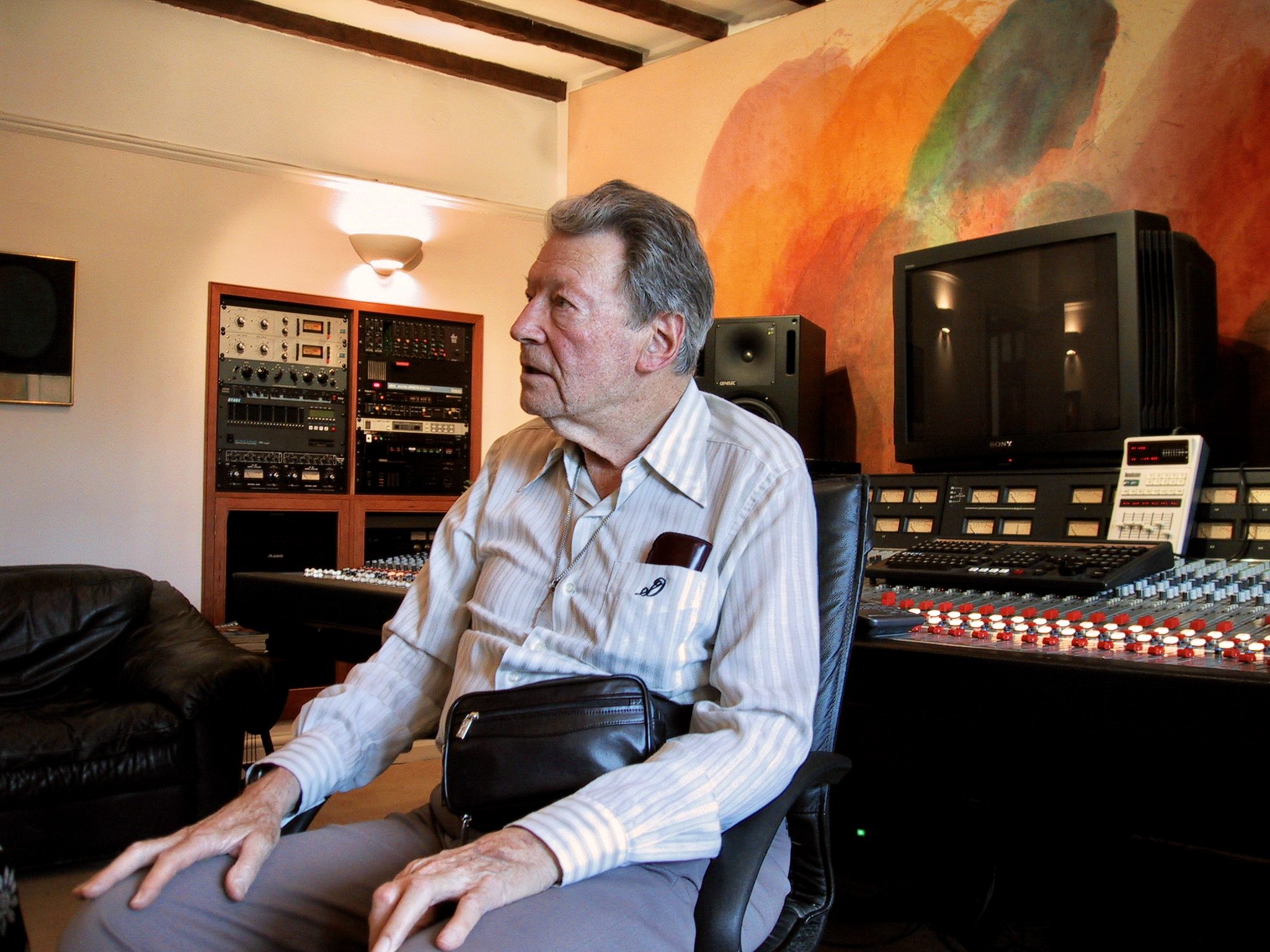
Of all the famous people who have sat in my control room over the years, few arrived with stories quite like my great-uncle Sid’s.
More from the studio journal
If you enjoyed this story, you might also like these:
“Number Please” — Norma Jean and the Bell Telephone years
A family story about Los Angeles, connection, memory and 1950s America.
Read the story
When Roger Dean brought Aurora to the studio
A lovely behind-the-scenes moment with Roger Dean, Steve Howe, the Aurora artwork, and the studio where the album was made.
Read the Aurora story
Explore Curtis Schwartz Studio
See the rooms, instruments and residential setting where the music is made.
Visit the studio
