My Diary Is a Hopeless Optimist
Everything that really matters is what the diary doesn't see.

Rick James, YolanDa Brown and me during recording sessions for her latest album.
I have a diary.
It's beautifully organised.
It's a hopeless optimist.
For example, next Tuesday it simply says:
"Jazz Sextet."
According to my diary, that’s the whole story.
The diary doesn’t understand that the day before will be devoted to arranging the live room for this session: moving a Steinway grand piano, laying out microphones, headphones, music stands and DI boxes, checking sight lines so six musicians can all see one another, and anticipating what happens if, halfway through a full-band take, one of them suddenly produces a shaker from his saxophone bag and joins in.
(It happens.)
Nor does my naively optimistic diary mention that, after everyone's gone home, there'll be rough mixes to prepare, stems to export, Dropbox folders to organise, hard drives to back up, catalogue and squirrel away somewhere safe, barcodes and ISRC codes to pester record companies for, vinyl acetates to listen to and check agains the masters, emails to answer and conversations that may continue for weeks.
As far as my diary is concerned...
Tuesday – Jazz Sextet.
That's the trouble with diaries. They never record everything that comes before it - or everything that follows.
Studio diaries are wonderfully simplistic.
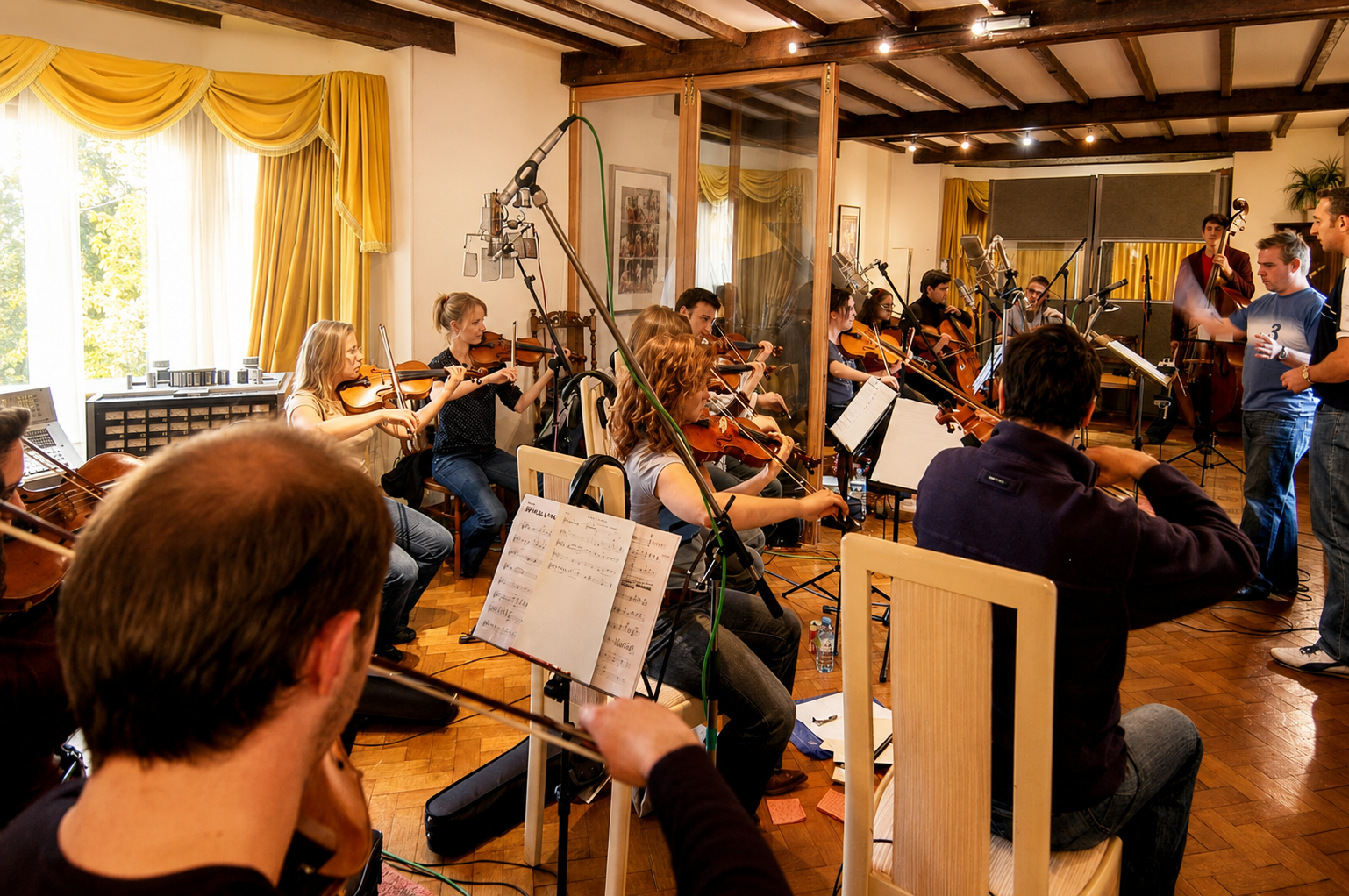
James Pearson, now Artistic Director at Ronnie Scott’s, conducting a string session at Curtis Schwartz Studio. A few words in the diary can conceal days of preparation.
Which raises the real question: what are people really booking?
The answer isn't the piano.
Although I do have a rather lovely Steinway.
It isn't the collection of vintage Neumann microphones.
Although I'm very fond of those too.
The answer is something much harder to describe.
When somebody books me, something happens that isn't written anywhere on the booking sheet.
I become invested.
Not financially invested.
Nobody has yet offered me shares in a prog-rock band.
Creatively invested.
Your problems become my problems.
Your excitement becomes my excitement.
If you're lying awake at two in the morning wondering whether Song 4 should really come before Song 3...
...I’ve probably been wondering exactly the same thing.
One of my favourite examples happened recently while Steve Howe and I were working on the latest YES album.
We were in the middle of recording when Steve looked across the control room and said, almost as an afterthought,
"Curtis... can you pull up that guitar part we recorded in the '90s?"
Notice what he didn't say.
He didn't ask whether I still had it.
He simply asked me to play it.
There's quite a difference.
He didn't even hesitate. He simply assumed I'd still have it.
A couple of mouse clicks later it was coming through the studio monitors.
Steve listened.
Nodded.
We carried on recording.
The whole interruption lasted less than a minute.
To anyone watching, it probably looked entirely unremarkable.
To me, it represented decades of quietly backing up sessions, transferring archives onto newer hard drives, keeping everything organised and believing that today's recording might still be useful many years from now.
“Yesterday” is a surprisingly flexible concept.
The same thing happens all the time.
Not long ago Mitch Dalton came over to create stems from an album we recorded together back in 2011.
No problem.
Stacey Kent recently asked for multitrack recordings dating back to 1997.
No problem.
Over a year after RIOPY recorded here, his record company asked if I could revisit the original MIDI performances. During mixing, one of the pieces had grown longer, so the original MIDI performance needed extending to match the finished recording.
Finding the files was easy.
The interesting part wasn't finding the files.
It was remembering the music well enough to continue the performance naturally, in RIOPY's style, as though the recording session had never really ended.
Those files were eventually shared with Steinway themselves, allowing the performances to be distributed by Steinway to Spirio pianos around the world.
None of us could possibly have known that on the day we made the recording.
That's exactly why I keep everything.
People sometimes think archiving is about looking backwards.
I think it's about looking forwards.
Because you never know what today's recording might become tomorrow.
Or next year.
Or twenty years from now.
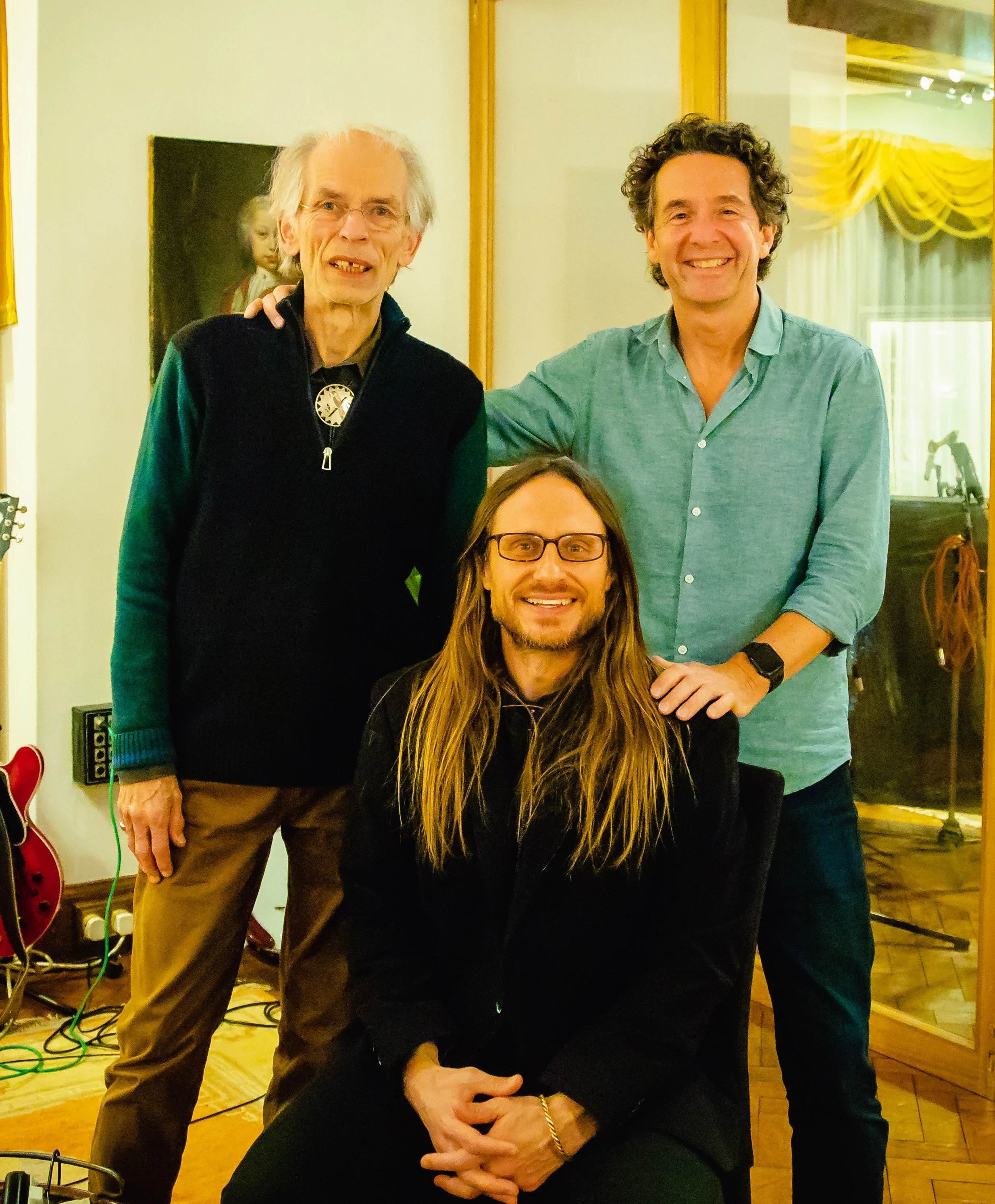
Steve Howe, Jon Davison and me during Yes recording sessions. The session ends. Musical relationships continue.
People often think they’re booking a recording studio.
They’re not.
They’re beginning a relationship.
Whether somebody books an afternoon, a week or a month, I become invested in helping the artist make the record they set out to make.
Their problems become problems I want to help solve.
Their ambitions become something I care about.
I never forget whose music it is. But I do care deeply about helping it become the best version of itself.
Making music together creates trust and, very often, lasting friendships.
Years later, somebody can still pick up the phone and say,
“Curtis... have you still got...”
Not because they’re hoping I have.
Because they rather expect that I will.
And they’re usually right.
The diary gives the session a single day.
The relationship begins long before it, and can last for decades afterwards.
•
Thinking about recording an album?
Whether you're recording a single piano piece or a full band, I'd love to hear about your project.
Curious what it's like to record here?
Explore the studio, facilities and recent projects.
