Beautiful Melodies: Recording Knarika Karapetjana and Daniel Lebhardt
A classical viola and piano session at Curtis Schwartz Studio during a record-breaking May heatwave.
When violist Knarika Karapetjana and pianist Daniel Lebhardt arrived at Curtis Schwartz Studio in late May, Britain was in the middle of a record-breaking heatwave.
Outside, the gardens were baking in the sunshine. Inside, thanks to thick sandstone walls and 150-year-old oak floors, the studio remained surprisingly cool and comfortable. It proved to be the perfect environment for two days of focused music-making as Knarika and Daniel set out to record Knarika’s debut album.
“A contender for the best two days of my life.”
— Knarika Karapetjan
Knarika Karapetjana and Daniel Lebhardt recording in the live room at Curtis Schwartz Studio.
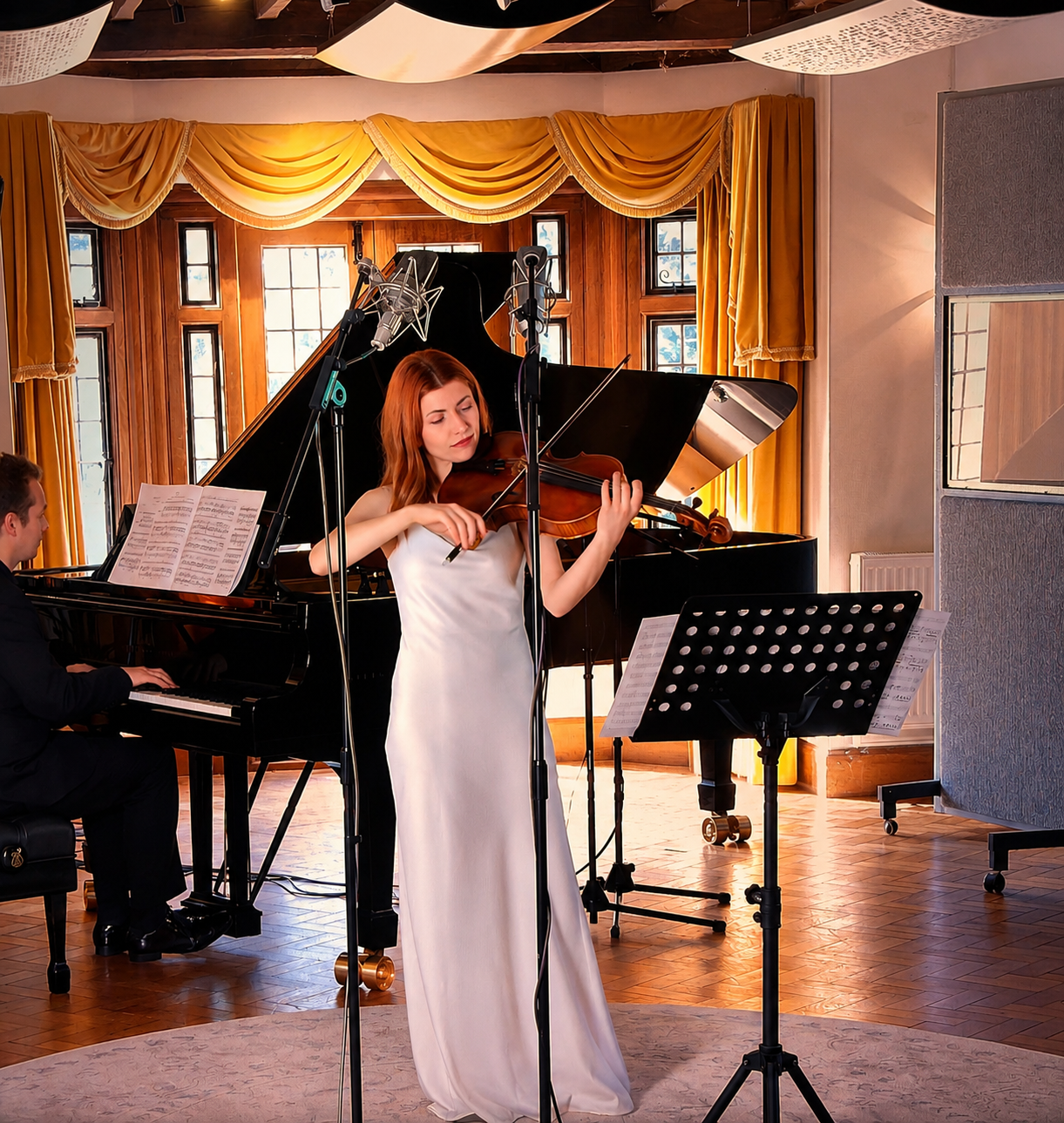
Music-making at Curtis Schwartz Studio during one of the hottest weeks of the year.
From the moment they began playing, there was a sense that something special was happening.
At one point during the sessions I jokingly suggested that the project could almost be called Melodies to Die For. Not as an album title, necessarily, but simply because of the extraordinary beauty of the music they had chosen to record. Again and again, the room filled with melodies that were lyrical, moving and utterly captivating.
For two days, the studio was immersed in Dvořák, Hindemith, Elgar, Schubert and contemporary works, performed with a level of musicianship that made the recording process feel less like work and more like a privilege.
Finding the Right Place
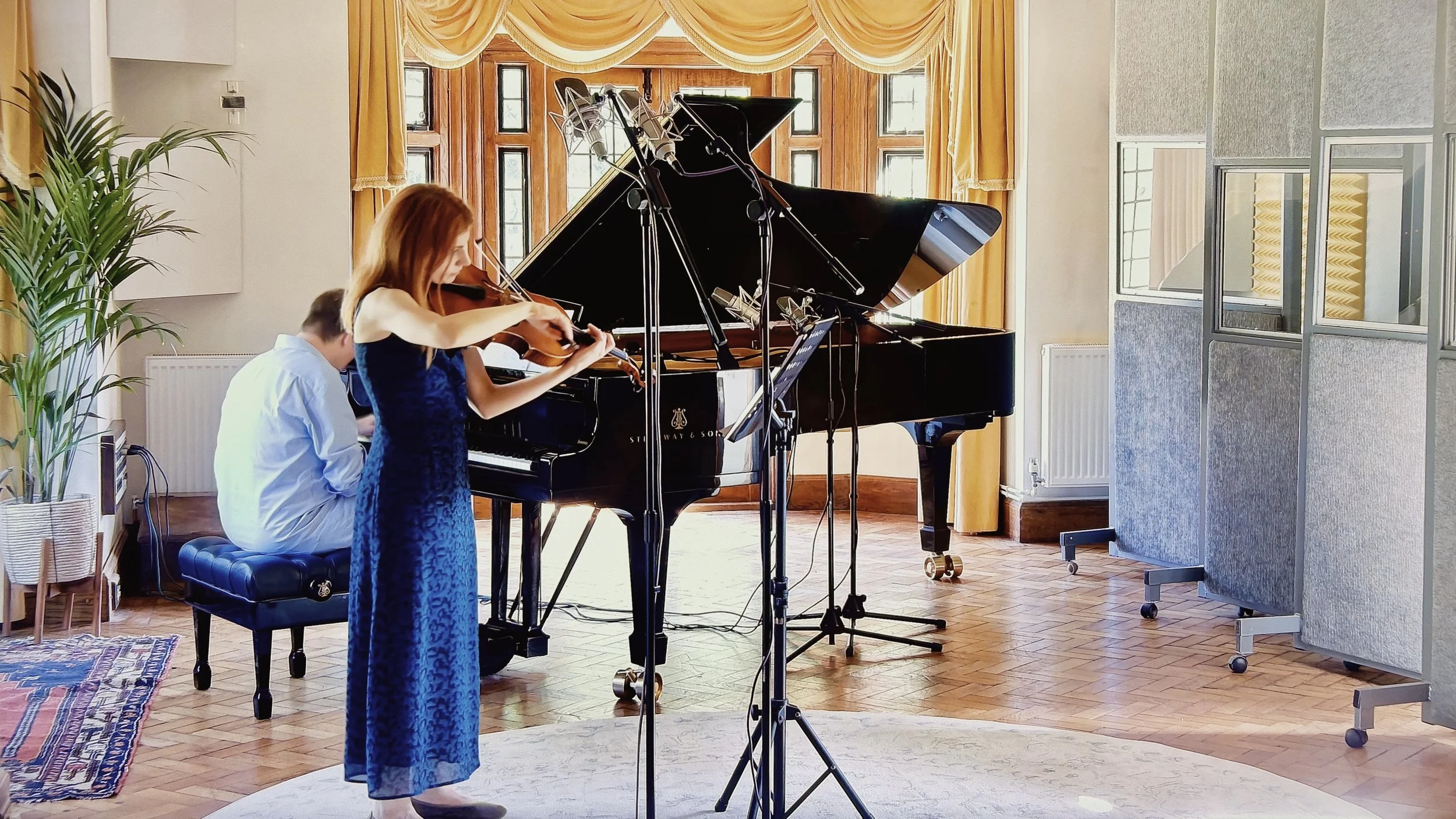
The final recording layout, with viola, piano and microphones carefully positioned for the session.
Every recording session begins long before the first note is played.
After arriving on Tuesday evening, Knarika and Daniel spent time exploring the live room and settling into the space. Daniel carefully chose the exact position he wanted for the Steinway Model D, while Knarika selected the ideal place from which to perform.
These decisions may seem small, but they matter. Move an instrument a few feet and the relationship between performer, room and microphones changes completely.
Listening to Knarika’s viola in the room was a particular pleasure. Violas are often thought of as the quieter member of the string family, but standing in front of her instrument revealed something quite different. The sound was rich, warm and surprisingly powerful, filling the room with an effortless beauty that immediately caught everyone’s attention.
Daniel also spent time becoming acquainted with the Steinway. Although he normally practises on an older Bechstein, he quickly found himself at home on the Model D.
The following morning, our piano technician arrived at 8am. Daniel worked closely with him, refining the instrument to his exact preferences before recording began.
Day One: The Joy of Making Music
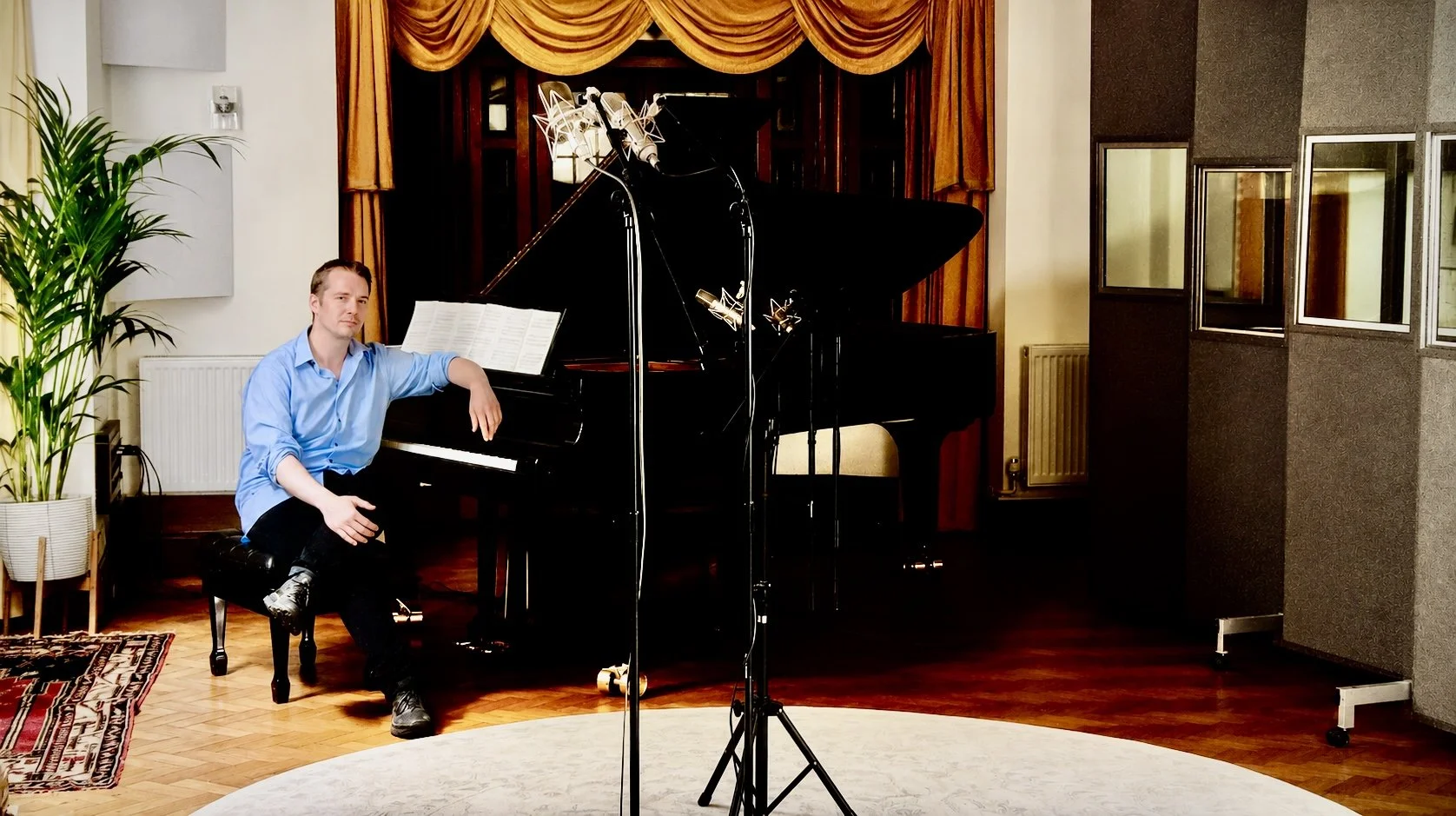
Daniel Lebhardt with the studio’s Steinway Model D during the recording sessions.
The first day focused on some of the most demanding works in the programme, including Dvořák and Hindemith.
Once recording began, both musicians settled into an extraordinary level of concentration. Hour after hour they worked through the repertoire with patience, precision and remarkable attention to detail.
One thing that struck me throughout the sessions was how little either musician wanted to stop. Apart from lunch and the occasional glass of water, there were no tea breaks and no loss of momentum. Their enjoyment of the music was obvious to everyone in the room. The happiness with which they played was palpable. They seemed completely absorbed in the repertoire and genuinely delighted to be making music together.
One of the pleasures of recording classical musicians is witnessing the thought that goes into every phrase. Tiny adjustments to timing, articulation or dynamics can completely transform the emotional impact of a performance. Yet despite the concentration required, the atmosphere never felt tense. There was a sense of excitement and discovery throughout the day.
As a producer and engineer, sessions like these are immensely rewarding. When musicians arrive this prepared, the studio becomes less about solving problems and more about creating an environment where great performances can flourish.
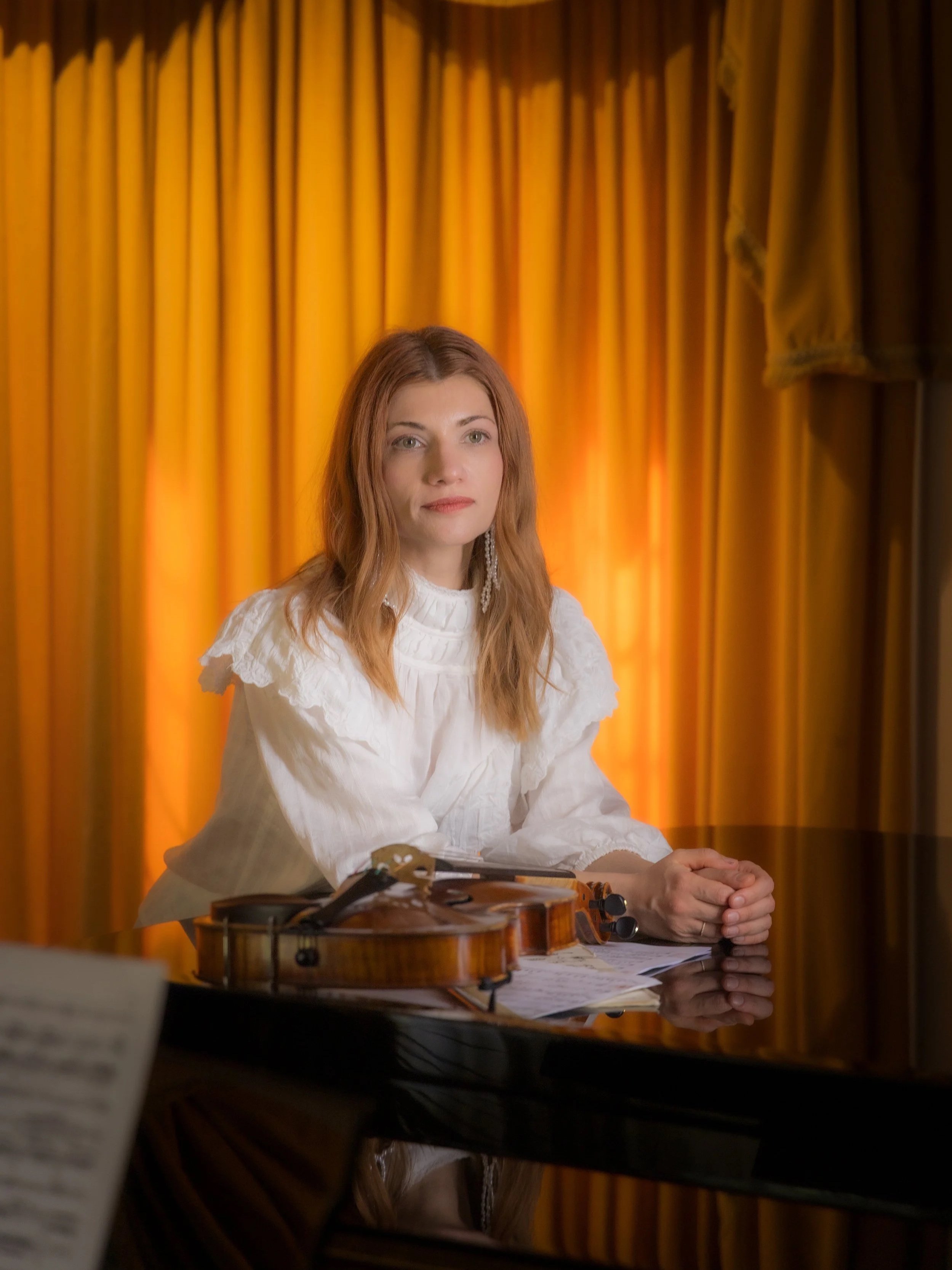
Knarika Karapetjana in a quiet moment between takes at Curtis Schwartz Studio.
Day Two: Music, Cameras and Creativity
The second day introduced a new element to the proceedings.
Photographer and filmmaker Ted arrived at 8am to document the project. Cameras, lights and stands soon appeared throughout the live room, requiring a few subtle adjustments to microphone placement while preserving the integrity of the recording setup.
Fortunately, one of the advantages of a large residential studio is flexibility. We were able to accommodate the filming without compromising the sound.
The day’s repertoire included Elgar, Baghdasaryan’s Nocturne, a contemporary work by Matt Anderson, and Schubert’s Ständchen, completing the album programme.
Throughout the day, Ted quietly captured performances and behind-the-scenes moments while Knarika and Daniel continued recording with the same enthusiasm and focus they had shown from the start.
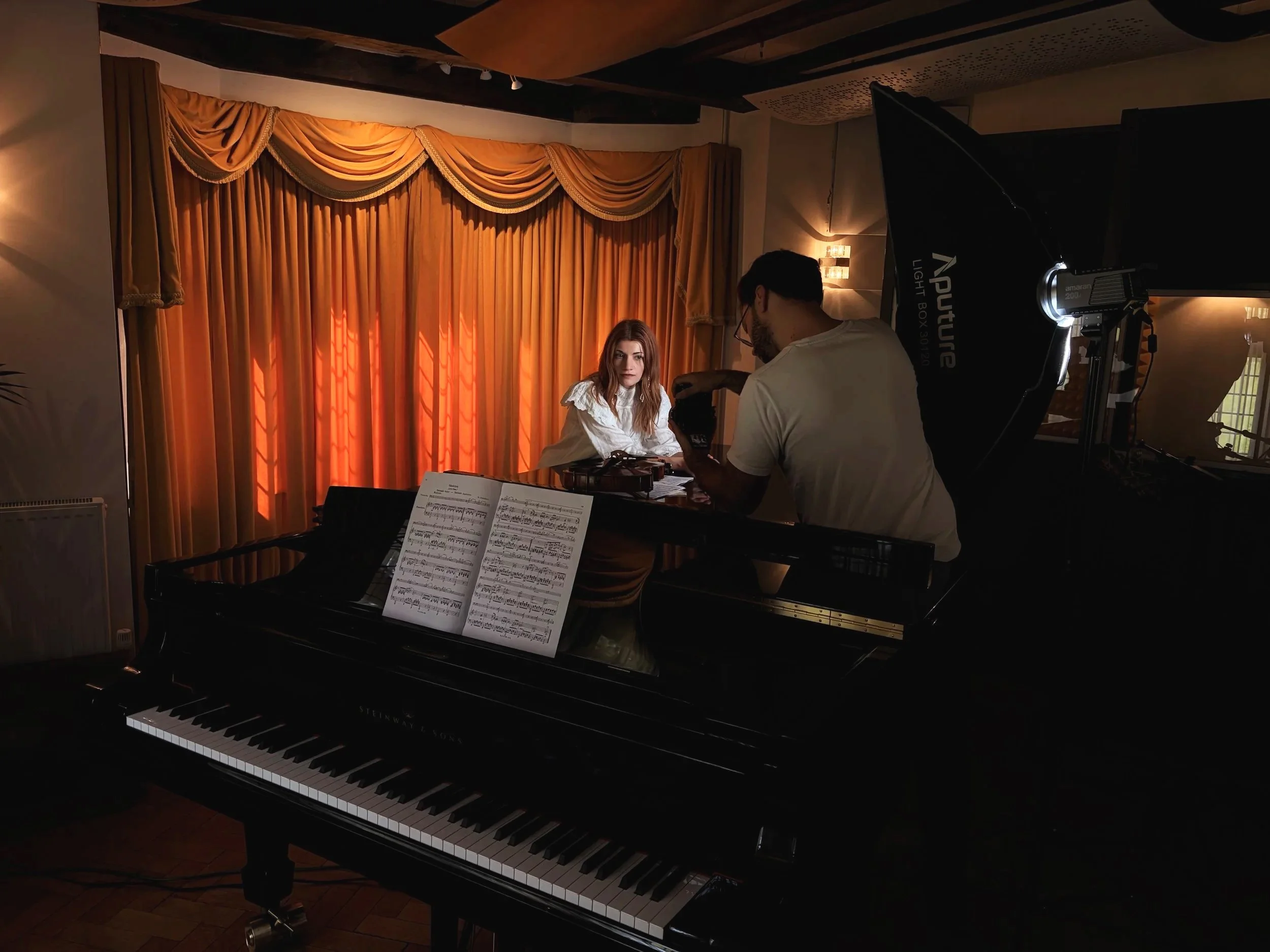
Documenting the recording process behind the scenes.
Later that afternoon, Knarika’s husband Matt arrived to hear the final stages of recording and share in the excitement as the project approached completion.
Listening Back
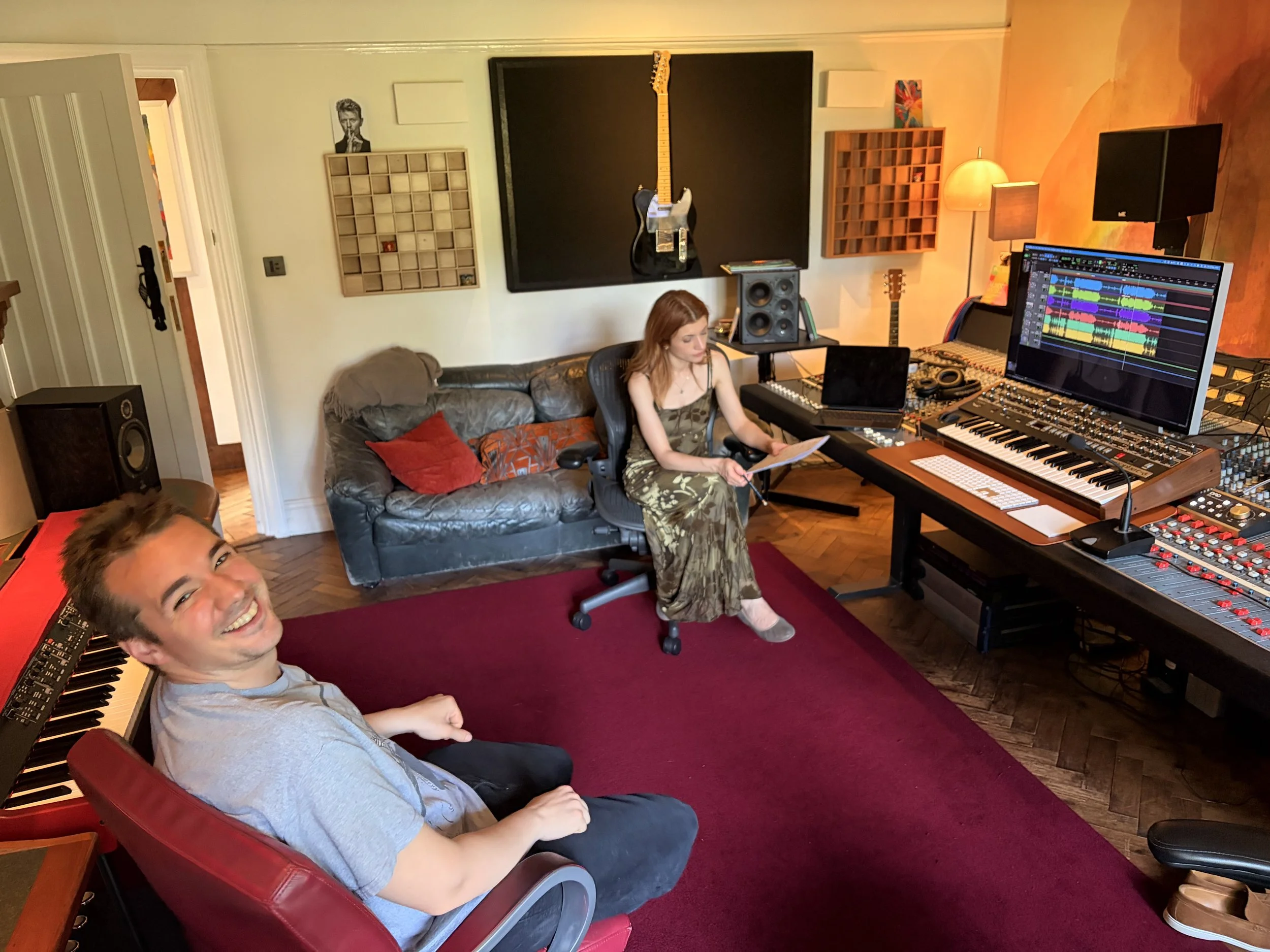
Listening back and selecting performances in the control room.
The recording room is where performances happen.
The control room is where decisions happen.
Between takes we would move through to listen back, discuss interpretations and decide whether a passage could be improved or whether it already contained the magic we were looking for.
Fortunately, there were plenty of smiles.
These listening sessions are often where an album begins to reveal its character, and it quickly became clear that this project was capturing something rather special.
Looking After the Artists
Great recordings are not created on music alone.
Over the course of the two days, the kitchen played its part too. A home-cooked supper welcomed the musicians on arrival, followed by salmon salads, spaghetti bolognese, fresh salads and an apparently endless supply of coffee.
The clear lunchtime winner, however, was the humble cheese toastie.
There may be more sophisticated studio catering available elsewhere, but judging by the reaction, it would be hard to improve on melted cheese, dill pickles and a little house sauce between two slices of bread.
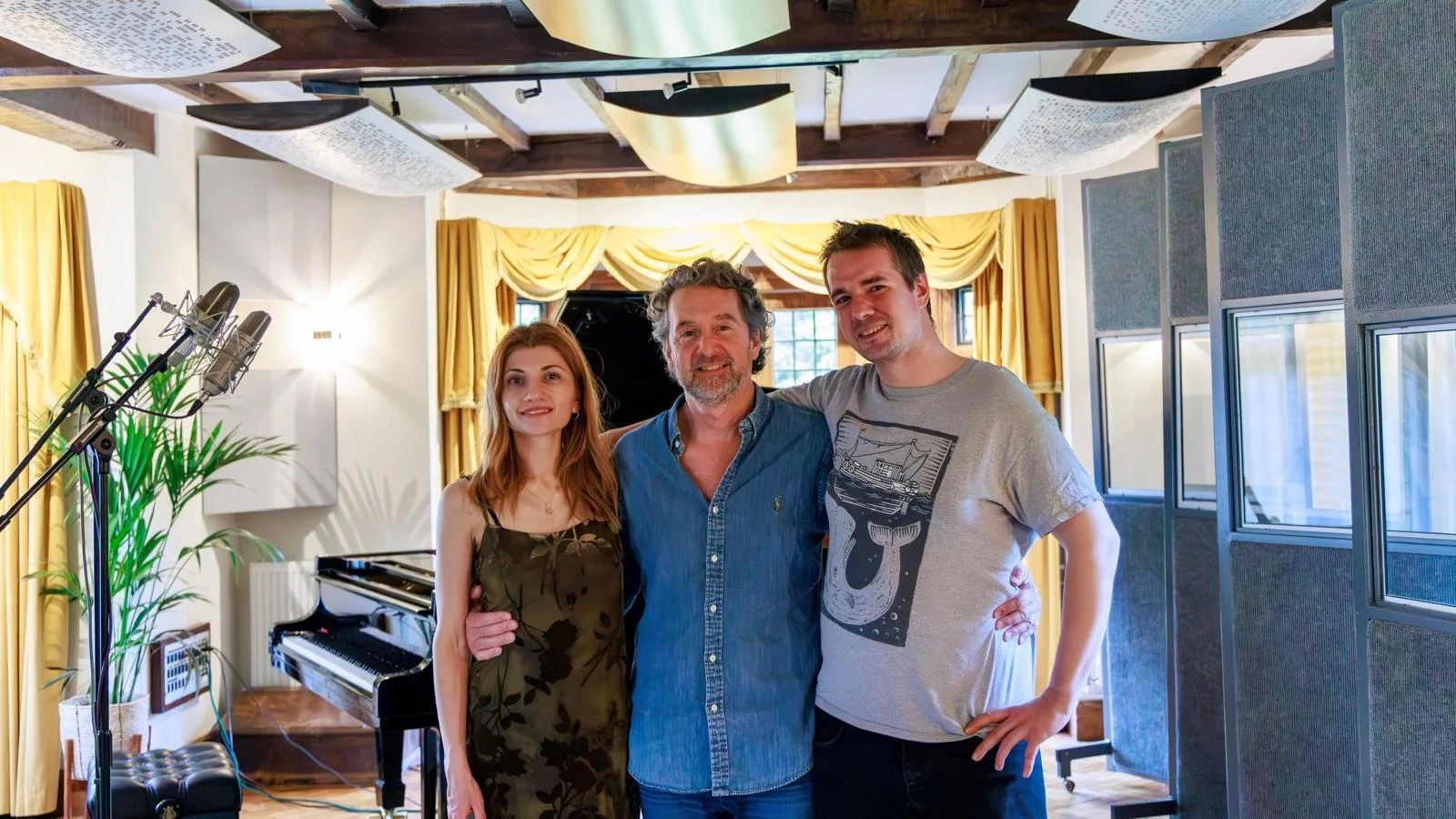
Three very happy people at the end of two productive days.
A Memorable Compliment
Perhaps the most memorable moment came as the sessions drew to a close.
Knarika described the experience as “a contender for the best two days of my life.”
Even allowing for the glow of the moment, it was a lovely thing to hear, and a reminder of how special those two days had felt.
Recording an album can be demanding, emotionally intense and physically tiring. Creating an environment where artists feel relaxed, supported and able to perform at their best is every bit as important as microphones, acoustics and equipment.
Comments like that suggest we got something right.
Looking Ahead
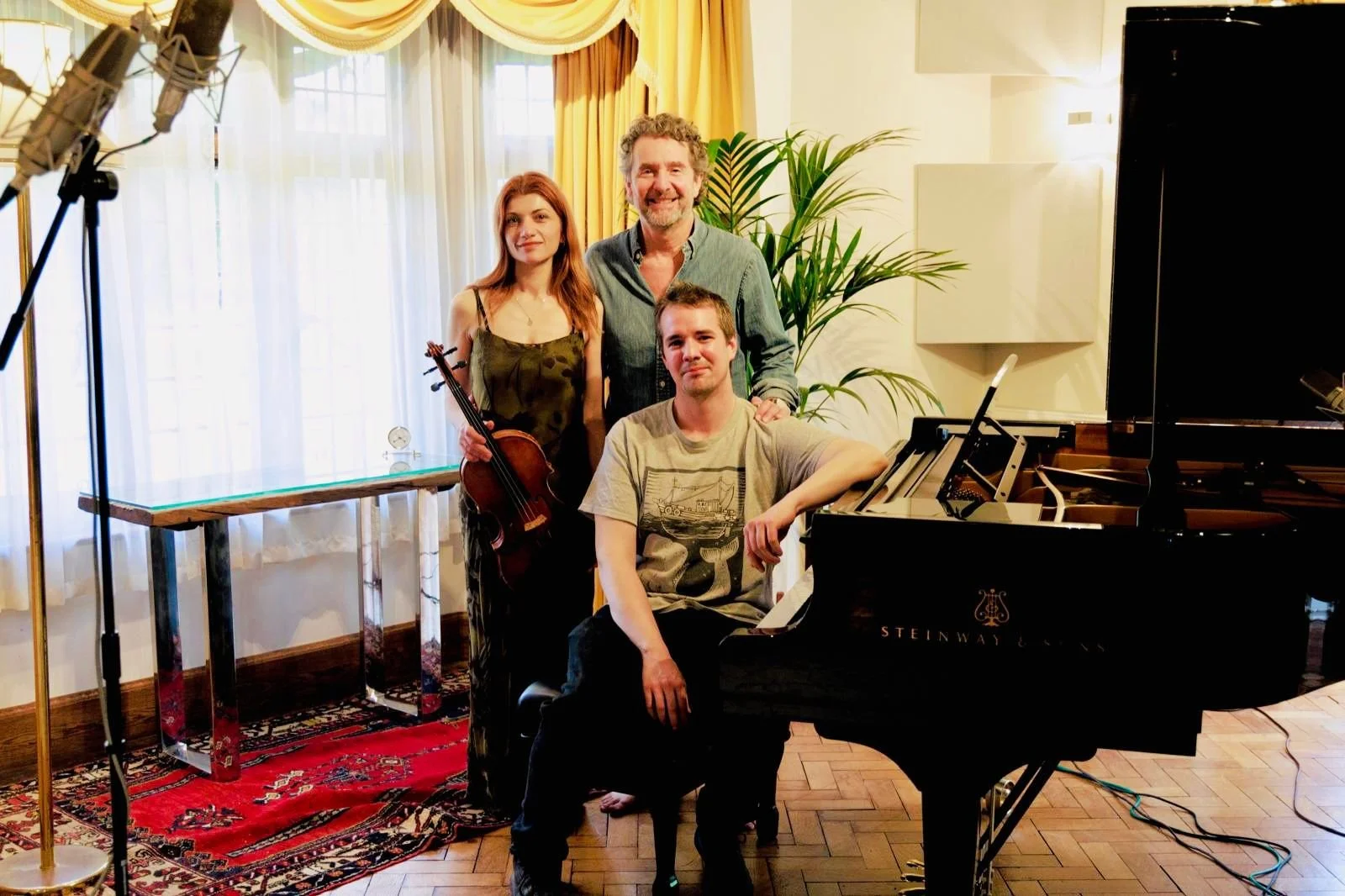
Celebrating the completion of two remarkable days of music-making.
Daniel was equally enthusiastic and is already looking forward to returning. In fact, I offered him use of the studio whenever he wanted somewhere peaceful to prepare for recitals.
Given the choice between practising on a Steinway Model D surrounded by Sussex countryside or listening to builders drilling holes in a city flat, the decision did not seem particularly difficult.
The album now moves into its next stage. Rough mixes were assembled and uploaded to Dropbox so that Knarika and Daniel could begin reviewing performances while the sessions were still fresh in their minds. The next step will be selecting final takes before the project moves towards mastering and release.
Projects like this are a reminder that great recordings are ultimately about people rather than technology.
The equipment matters.
The acoustics matter.
The piano certainly matters.
But what stays with you are the musicians, the performances and the shared experience of creating something meaningful and permanent together.
Knarika and Daniel brought all of those qualities in abundance.
It was a pleasure to have them here.
Thinking about your next project?
Curtis Schwartz Studio offers recording, mixing, mastering and Dolby Atmos work from a private residential studio near London.
